



 July 11, 2015
2177
July 11, 2015
2177

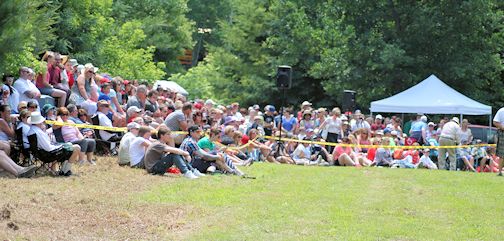
A good crowd made its way to Robinson Park, just east of Victoria Park, Kincardine, the new venue for the heavy events at the Kincardine Scottish Festival, Saturday, July 4.
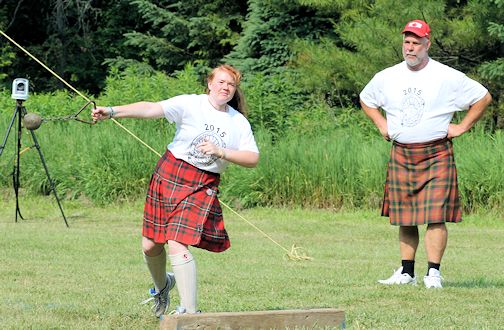
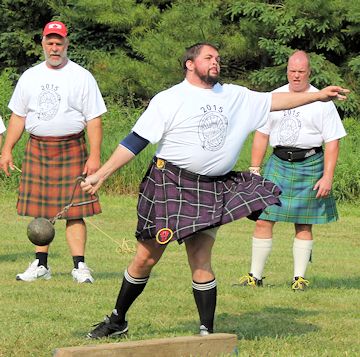
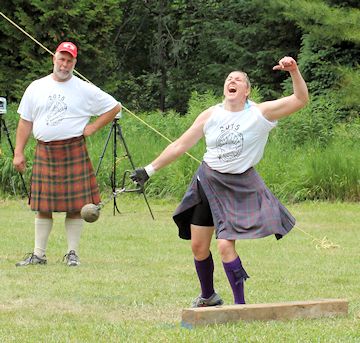
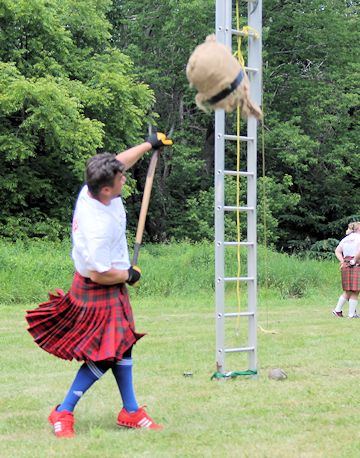
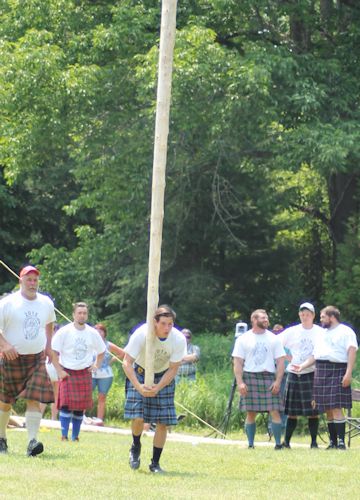
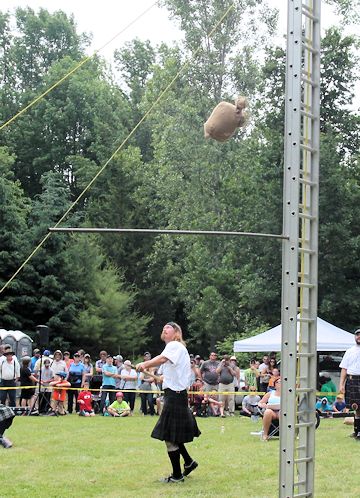
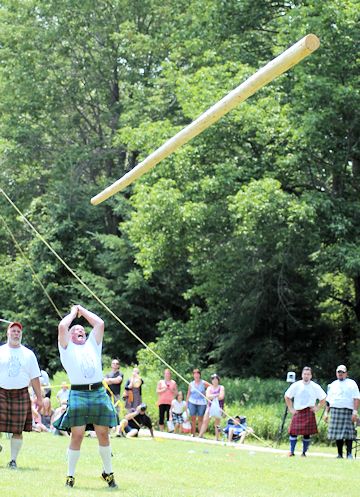
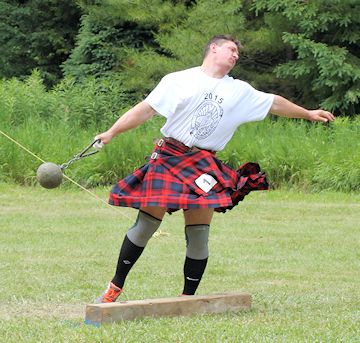
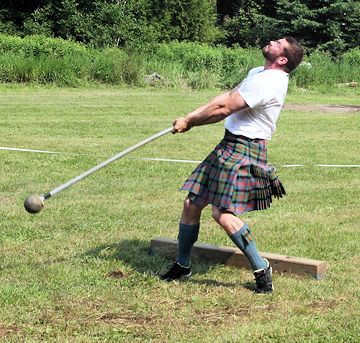
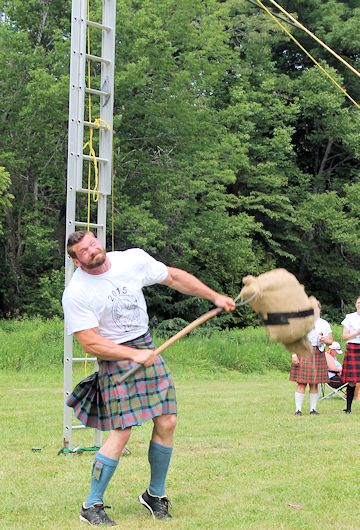
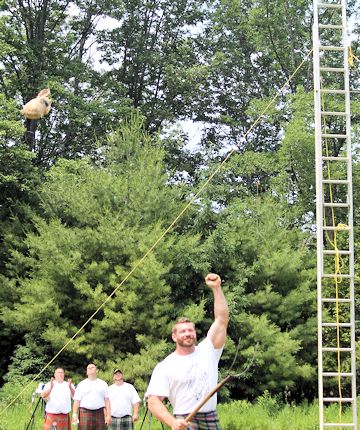
Competitors - men, women and youth - demonstrated their skills at stone throw, weights for distance, weights over the bar, hammer throw, sheaf toss and caber toss.
A HISTORY OF THE HIGHLAND GAMES
Highland Games were held long ago by the clans of Northern Scotland. Contests in running, leaping, vaulting, wrestling, lifting heavy weights and putting stones (as one sees today) were begun more than 1,000 years ago.
In 1057, the Scottish King, Malcolm of Canmore, held a crude form of Scottish athletics to lift the morale of his troops before battle. The strongest men were chosen as the King’s personal body guards and the fastest became his couriers. Implements used were those found around the blacksmith’s shop and available to the early Scotsman. Woodsmen produced the caber, a blacksmith’s hammer became the throwing hammer, and scale weights became the 56-pound and 28-pound weights thrown for distance and height.
In time, the games made their way into local community fairs and by the 16th Century the games became festive occasions, and in 1574 "tossing of ye barr" (caber-tossing) first appeared on record.
But in 1747, the Act of Proscription banned carrying arms, wearing the kilt, playing the bagpipes and public gatherings in Scotland. This essentially brought to an abrupt halt the old clan system in the Highlands. The Highland games ceased and were in danger of becoming extinct if something was not done to revive them.
In 1781, the Scots Highland society offered to sponsor trophies and prize money for competitions in dancing, piping, and athletics during a popular fall fair. The next year the Act of Proscription was repealed. That year, the St. Fillian’s Society organized a full-scale highland games for the first time in decades, including dancing, piping and athletic events.
Scottish sports were spread all over the world by those in the Scottish Societies particularly by those people who emigrated between 1750 and 1850. The first Highland games in Canada took place in Antigonish, Nova Scotia, in 1863. Today, highland games exist around the world where incredible athletes compete in these time-honored events.
THE EVENTS CONTESTED
Stone: A stone is thrown in a style similar to the modern shot-put for maximum distance. The modern track and field shot-put has, in fact, its roots in the Heavy Events.
Weights: These weights are metal with a chain and ring handle. The total weight is 28 pounds and 56 pounds with the overall length of each implement being 18 inches. The athlete has a 9-foot run-up and must throw the weight with one hand. The object is to throw the weight as far as possible. In a separate event, the 56-pound weight is thrown for height.
Hammer: The hammer head is metal, and the shaft is wood (rattan or bamboo), or plastic (PVC pipe is sometimes used for increased durability). The total weight of each hammer is 16 pounds (light) and 22 pounds (heavy). The length of the hammer can be no longer than 50 inches in overall length. The hammer must be thrown with the feet in a fixed position, but a competitor may move his feet after the hammer is released.
Caber: There is no standard size or weight of a caber but the caber is wood and typically of a length and weight so half the competitors can turn it. The caber is ‘stood-up’ for the athlete, with the heavy end on top. The attempt begins when the caber is lifted from the ground. The thrower may take any length of run he wishes and may toss the caber from where he chooses, but the caber must pass through the vertical position in order to count as a turned caber. The "clock face” method of judging is used, as opposed to distance, such that a perfect toss will flip over and land with the small end pointing directly at 12 o'clock away from the competitor.

 Written By
Liz Dadson is the founder and editor of the Kincardine Record and has been in the news business since 1986.
Related Stories
No related stories.