



 July 29, 2015
2113
July 29, 2015
2113

If you haven't already got a ticket to one of the two performances of "Railroad to Ripley" this weekend at the Ripley Reunion, you better get one before they are sold out.
Written by Murray Yungblut, this play is an engaging, well-written, hilarious history lesson, which is what the playwright was hoping it would be.
"Next to woodworking, there’s nothing I’m more interested in, or passionate about, than history," says Yungblut, "and the history of where we live has to be the most important because it gives you a sense of being part of something bigger than getting up in the morning and plugging away through another day."
He says the events that brought about the Ripley community may not interest many outside of it, "but understanding what we came from can be a big help in keeping us engaged in perpetuating what we have."
There was no Ripley village before the railroad came, says Yungblut, just a rural post office and Bill Carter’s liquor store.
"We had no waterways for power and transportation. Then, in 1868, Bruce County held a vote to decide where the railroad would go through the county, and since the northern half was more settled because of the Saugeen River, the southern townships lost the vote and were left high and dry. The line went from Palmerston, through Walkerton, Paisley, and to Southampton with Bruce County putting up a lot of the money."
Through their own agitation and gumption, the southern townships - Kincardine, Huron and Kinloss - succeeded in getting an extension from that northern line to service their townships and they had to fund it themselves, says Yungblut. "That is the basis of the play. I chose the railroad theme because it was the making of our little village."
While there is more conversation than action in this show, those witty bits of repartee are what make the play so engaging.
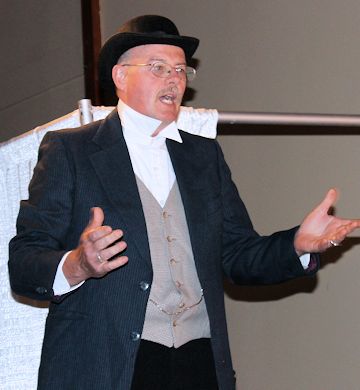
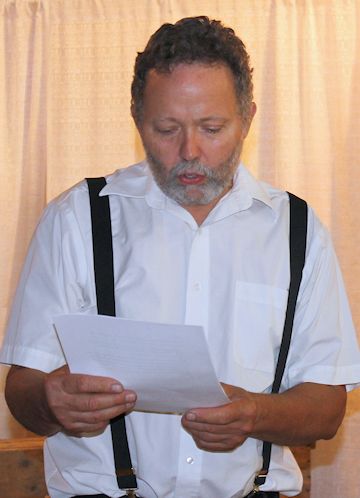
Of course, there are as many residents of the community against the railroad as there are in favour, and they have their verbal jousting matches. In a cameo appearance, Yungblut plays the part of Rev. Rathburn, a fiery pastor, who expounds about how the railroad will bring the "seeds of sin" to the community. "The cost is too high; we must resist the temptation," he shouts. To which Angus replies, "Well, I guess we'll put him down as a No vote."
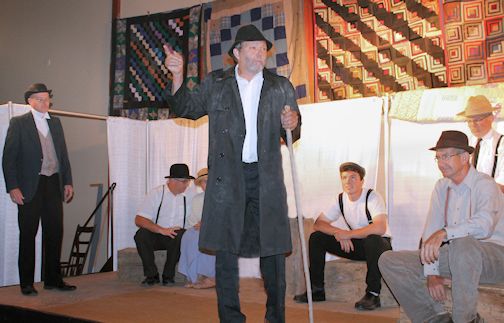
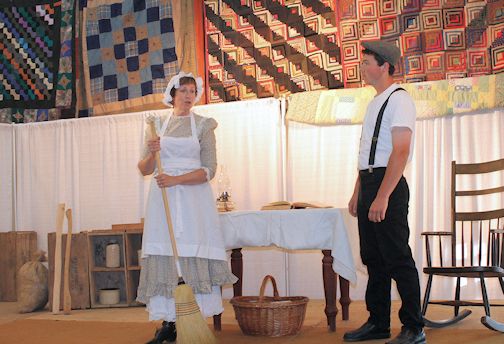
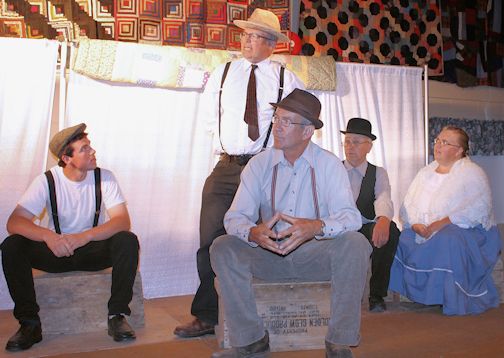
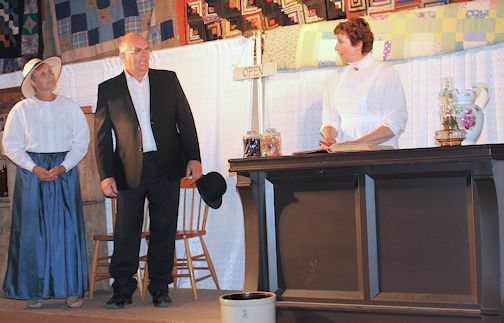
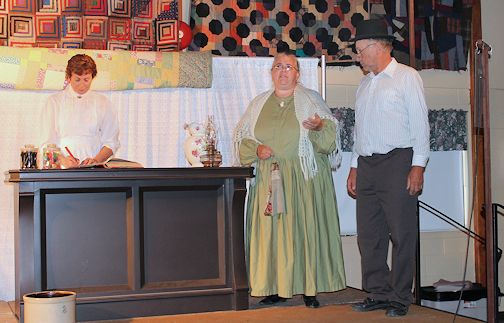
"Railroad to Ripley" contains three scenes - first, in a rudimentary dry goods store (out of a home); second, at a town hall meeting to discuss the possibility of bringing a railroad to Ripley, with the reeve steering a rowdy group toward the inevitable conclusion; and third, 10 years later in a the prosperous Village of Ripley in the new hardware store that the scene one proprietor has just moved into - the village is getting ready for the Ten-Year Party to celebrate 10 years of the railroad.
Yungblut has been part of HAWK Theatre for 11 years, both acting and directing, and he says writing a play has been on his "Bucket List" for some time.
"When Keith Vander Hoek asked me a couple years ago if I’d be interested in writing something for the Ripley Reunion, I took about two seconds to say yes. But, I said, it would have to be historical.
"I’ve had a keen interest in the founding and development of Bruce County for many years and have collected and read anything I can find about the subject. The many stories and references to the towns, villages and crossroads that we drive through and take for granted today, continue to stimulate my imagination and amazement at what those first settlers encountered and endured.
"This has been a perfect opportunity with cart blanche to write whatever I wanted to write about. I love the fact that those attending the show will have a direct interest and some knowledge of the contents of the play with Purple Grove and Pine River getting a prominent place in the action. Also discussed is the subject of Ripley’s name being changed to Dingwall for a number of years in the 1870s."
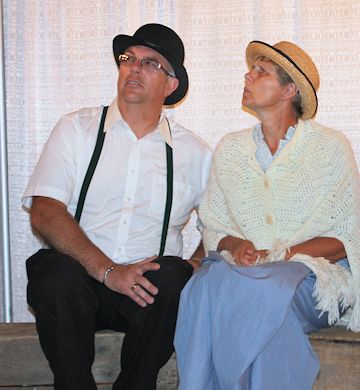
Joining Yungblut on stage are his wife, Lynne Jewson, as shopkeeper Esmerelda MacDonald; Fran Farrell and Ron Rock as Lottie and Alex McIver; Helen Orr and Keith Vander Hoek as Minerva and Walter MacLeod; Paul Harris as William; Eion MacKay as Angus; Bradley Reid as Thomas; Don Simpson as Jack; and Sam Finnie as Reeve Robert Johnson (the only historically-accurate character in the play).
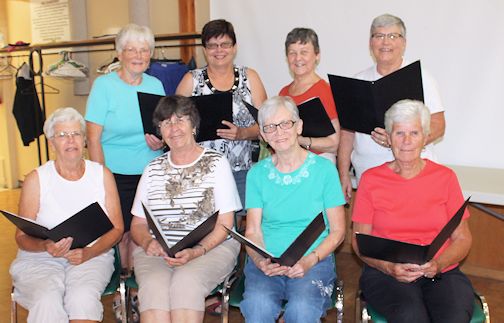
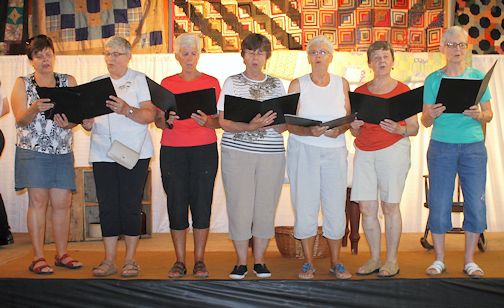
The show also features a choirs singing "This Train Better Get to Ripley" during the scene changes. Members include: pianist Shirley Harris, Jean MacDonald, Shirley Galloway, Sheila MacDonald, Elaine Pollock, Doreen Platten, Marilyn Johnston and Dianne Simpson.
 Written By
Liz Dadson is the founder and editor of the Kincardine Record and has been in the news business since 1986.
Related Stories
No related stories.