Ripley 4-H Dairy Club tours Dalvis Farms outside Teeswater
The Ripley 4-H Dairy Club toured Dalvis Farms, located just outside Teeswater, for the fourth meeting, Saturday, July 24.
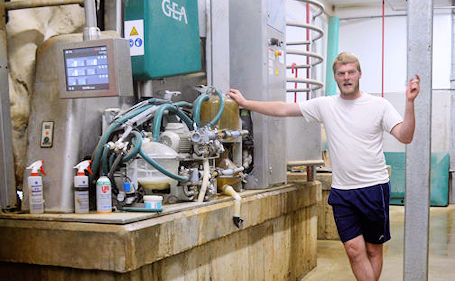
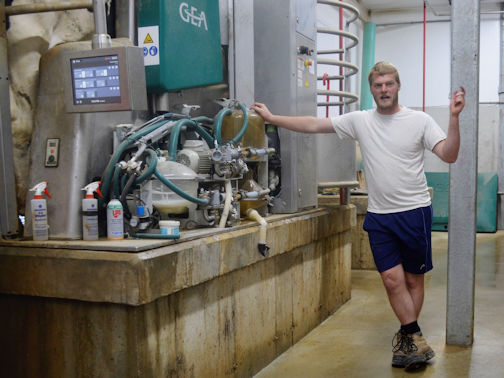
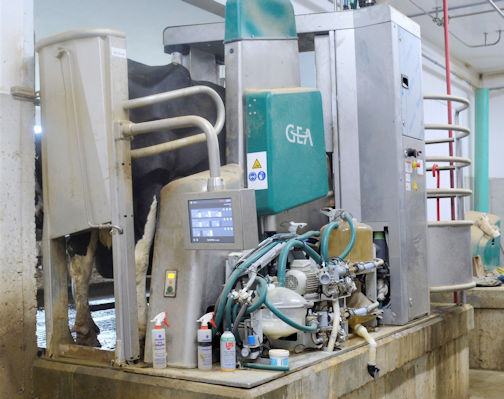
This agriculture business is run by Ron Groen, his parents, and several employees, and they milk 500 Holstein cows with 12 GEA robots.
Before the installation of the robots, the Groens milked their cows with a 20-stall parlour. When Groen finished university, his parents weren’t ready to retire yet so he went to Belleville and bought his own herd. After milking in Belleville for five years, he moved his herd to Teeswater, and merged it with his parents’ cows.
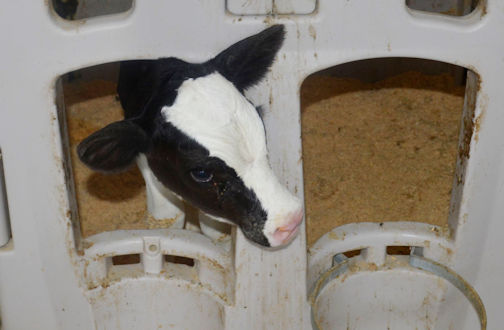
The Ripley 4-H club’s tour began in the calf barn which houses all the heifer calves born on the farm, from the age of three days until weaning. For the first while, the calves are housed individually and fed with bottles. After a few days, they are moved to group pens and switch to robotic milk feeders.
When the calves are weaned, they move to the next barn which is where the heifer calves are grouped into larger groups of 25. As they get older, they are moved to the heifer barn where they live until just before they calve. At this time, they are moved to one of the two milking barns.
There are two identical milking barns on the farm. “If you see a switch in this barn, there is an identical switch in the same place in the other barn,” Groen told the club. The reason they built the barns this way was so everybody had to learn only the layout of one barn but can work in either barn.
Besides the milking cows, the milking barns house the newborn calves. Here, the calves are fed their own mother’s colostrum for three days; then, they are old enough to move to the calf barn. Other then the nursery where the calves live, there is a kitchen with a fridge for storing the colostrum, a dishwasher and sink for cleaning and sterilizing the bottles and pails used for feeding the colostrum.
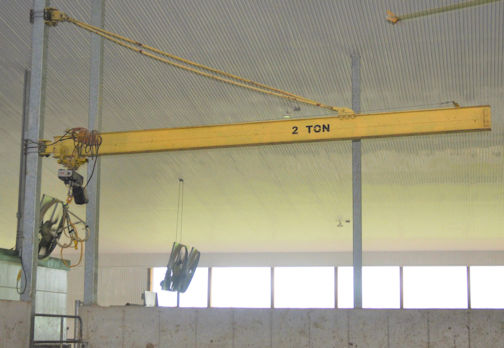
The milking barn has a special pen for the cows that are sick or injured. This pen has a straw bedding pack, which is easier for the cows to navigate than the slats in the main pen. Also in the sick pen, there is a crane that can lift injured cows up and let them move around and exercise the injured joints without putting weight on them and causing more damage.
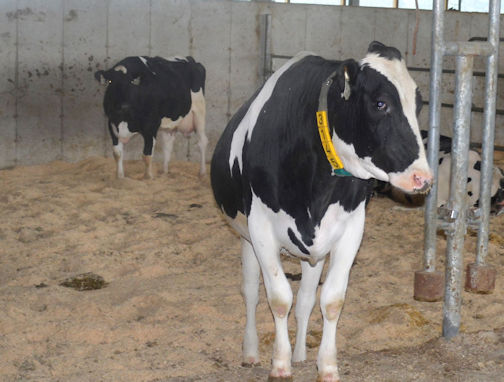
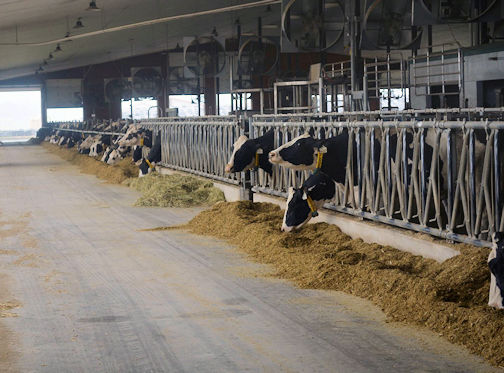
The main milking pen is split into two parts: the feed area, and the free-stall area where the cows can lie down and rest. There is a one-way gate separating the two areas. In order for the cows to access the feed area, they must go through a gate that reads the radio tag worn around each cow’s neck. If the cow has been milked in the past eight hours, the gate to the feed area opens. But if the cow has not been milked in the past eight hours, the gate to the robot holding pen is opened.
In the holding pen, there are three robots. If one of the robots is empty, the cow can go and get milked. But if all three robots are full, the cow has to wait for one to empty. Once the cow has been milked, she exits the robot holding pen and into the feed area. This cuts down on the amount of cows the farmer has to round up because they haven’t been milked.
The Ripley 4-H Dairy Club thanks Groen for hosting the tour and explaining his farming operation to us.
The club’s next meeting is Aug. 14.
 Written By
No bio for this author.



Related Stories
No related stories.