How ancient sacred Swastika was hijacked, became hate emblem
To the Editor:
The Swastika, an equilateral cross with legs bent at right angles, has been a holy symbol in Hinduism, Jainism, Buddhism and many other traditions for centuries.
The similar-looking “hakenkreuz” or hooked cross is a symbol of Nazism, embodying painful and traumatic memories of genocide and racial hatred after the atrocities of the Holocaust.
The purpose of this article is to educate people to differentiate between the original Swastika and the Nazi hakenkreuz.
Due to a lack of understanding and continued use by hate groups, this ancient symbol tied to several religions
(see below) and associated with peace and prosperity, is being criticized and censored. In the face of current movements and incidents related to misappropriation of the symbol, the Hindu, Buddhist, and Jain communities have been forced to defend the use of their sacred symbol, and engage in efforts to counteract the damaging misunderstandings of its origins and meaning.
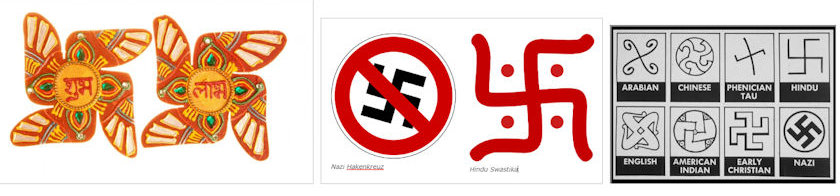 Sacred Hindu symbol for auspicious start to life, work, and religious occasions, and Nazi hakenkreuz symbol
The word swastika comes from the Sanskrit roots su (good) and asti (to prevail), meaning well-being, prosperity, or good fortune, and has been used in the prayers of the Rig Veda, the oldest scripture.
In Sanatan Hindu philosophy, it is said to represent various things that come in fours – the four yugas (Sat, Treta, Dwaper and Kalyug) or cyclical times, the four aims or objectives of life (Kaam, Arth, Dharm and Moksh), four stages of life (Learning, Earning, Returning and U-turning), the four Vedas (Rig, Yazur, Saam and Atharv).
In Buddhism, the emblem signifies the Buddha's footsteps, and to Jains, it means a spiritual teacher.
It's also a symbol of the sun god with a clockwise orientation and can be seen, often smeared in turmeric, drawn on auspicious ceremonies like marriages, and shop doors as a sign of welcome, or on vehicles, religious scriptures, letterhead, etc.
Different civilizations associate the sign with outstretched hands, four seasons, four directions, or with spreading light in all directions.
We sympathize and acknowledge the horrid way the symbol has been misused and continues to remain a vilified and maligned symbol. However, we hope that educating the community about the origins and meaning of the swastika will help people understand and to build a harmonious and inclusive community, where our communities can practice their culture and religious traditions without fear.
We urge people and law-makers to understand the difference and not to misinterpret auspicious Swastika as a Nazi symbol. We must celebrate the positive history of it rather than generalizing and censoring Swastika.
It is tragic that the Nazis stole the Swastik symbol and misused it for their propaganda of hate. We are saddened that its positive and healing message of the cycles of life is once again being hijacked; this time by fear and ignorance. We ask people to be mindful of the Swastikas different significance for Hindus, Buddhists and Jains.
Chandra S. Tripathi
Kincardine
 Written By
No bio for this author.






Related Stories
No related stories.