South Bruce 4-H Dairy Club tours two dairy farms near Teeswater
Saturday, the South Bruce 4-H Dairy Club held its third meeting.
This year, the Ripley 4-H Dairy Club and the Mildmay 4-H Dairy Club have joined to form the South Bruce 4-H Club.
The Club started the meeting at Doral Farms near Teeswater.
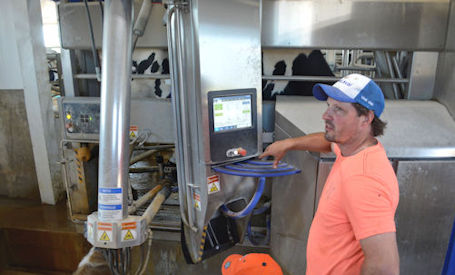
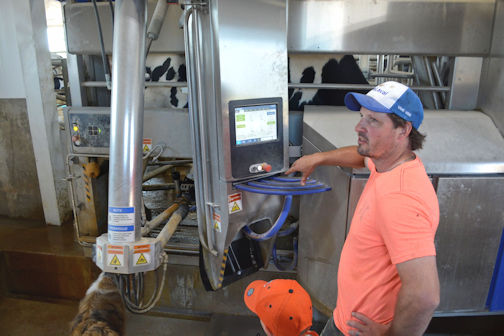
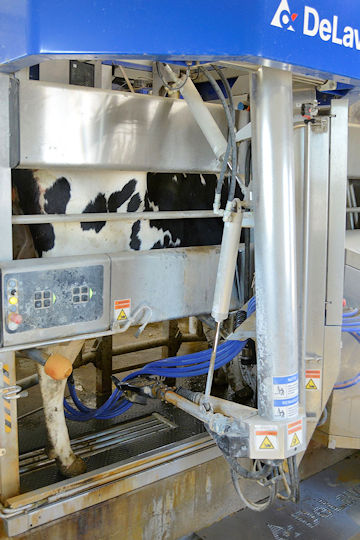
Doral Farms is owned and operated by Tom Whytock and his family. They milk about 70 Holsteins with two Delaval robots. Before installing the robots, they milked the cows in a double-eight milking parlour.
The barn is split into two groups with a robot on each side. The first stop on the tour was to watch one of the robots in action. Whytock explained what the robot was doing and all the different information the robot collects for him, such as animal heath and milk quality, and how he uses that information to manage his herd.
The next stop was the heifer barn which houses both the young stock and the dry cows. When the new calves are seven to 10 days old, they are moved to the heifer barn where they are fed using a robotic milk feeder. This device reads an electronic tag in the calf’s ear to identify the animal, then the robot releases the calf’s allotment of milk. The amount of milk increases as the calf grows and decreases when it is ready to wean.
When the club finished touring the heifer barn and after a quick look at some of the reports from the robots in the barn office, it was time to move to the next farm, Albadon Farms.
Started in 1866, Albadon Farms is a fourth-generation dairy farm. Josh Ireland and his family, with the help of several employees, milk more than 300 hundred Holsteins at two different farms.
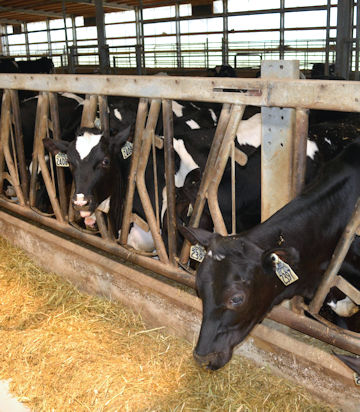
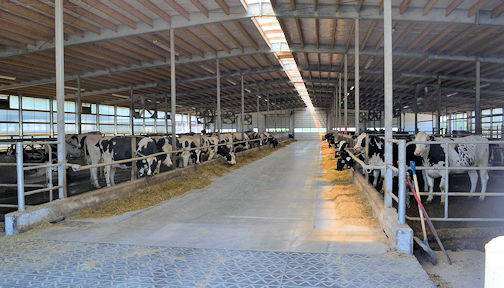
The club started the tour in the newest of the barns. The “Transition Barn” houses the cows close to calving and a group of six- to nine-month-old heifers on one side and the fresh cows on the other. By housing the main milking herd in a separate barn, the calving and fresh cows have a quieter, lower-stress environment.
Ireland told the club that he has found that the easier the calving the cow has, the better the lactation. Once a cow calves, she is moved to the fresh cow pen just across the feed alley.
At Albadon, they focus heavily on getting the fresh cows off to the best start they can. They have access to their silage ration as well as dry hay, they are tested for ketosis and closely monitored for other post-calving issues.
Next the club moved to the milking barn, where the cows are divided by stage of their lactation. Ireland showed the club the double-10 parlour they use to milk the cows. They milk the herd three times a day.
The club followed Ireland through the old milking barn now used for raising heifers to the feed room where the feed for both farms is mixed. The expensive feed ingredients, such as soybean meal, minerals, and high moisture corn, are dispensed by a system that measures off the weight of each ingredient. The rest of the ingredients are added to the feed mixer from the bunker silos behind the barns.
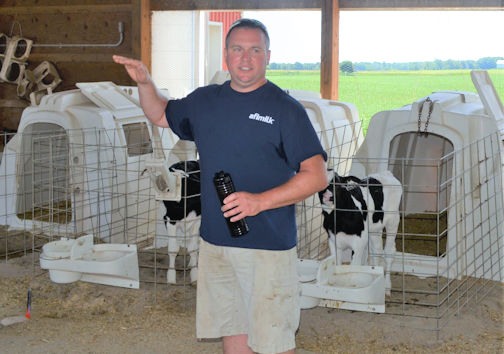
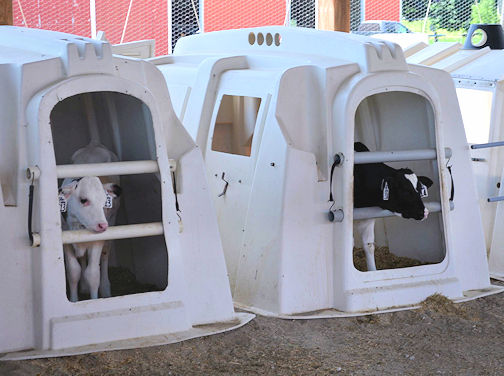
The last stop on the tour was the calf barn. This barn can be opened on all four sides, allowing for maximum airflow while still keeping the young animals out of the blazing sun, pouring rain, and snow in the winter. The calves live in hutches until they are weaned and moved into one of the pens at the end of the barn.
The South Bruce 4-H Dairy thanks Whytock and Ireland for taking the time to explain and show the club their farms. The next meeting is July 23.
 Written By
No bio for this author.



Related Stories
No related stories.