A solid crowd gathered for the pipe band competition in Victoria Park, and for the heavy events in Robinson Park, both held Saturday, July 2, during the Kincardine Scottish Festival and Highland Games.
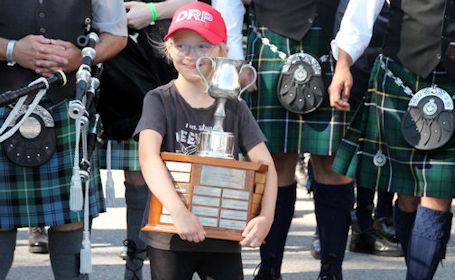
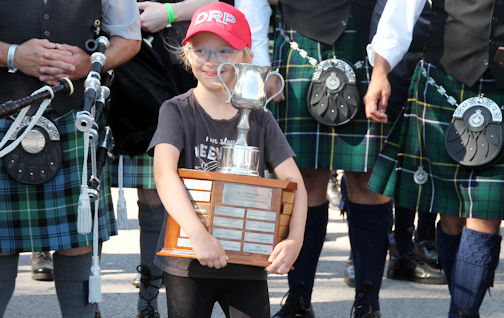
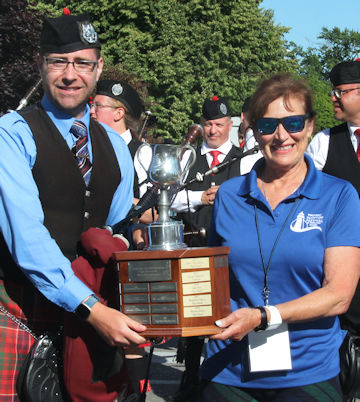
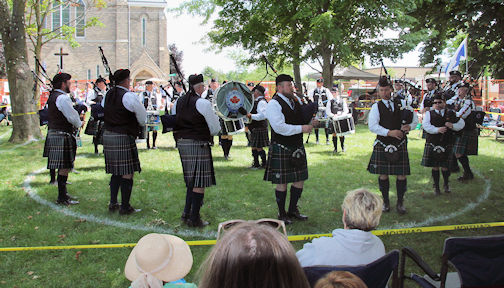
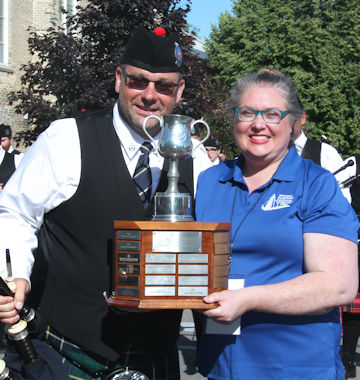
As the lone entry competing in the Grade 1 pipe band class, the 78th Fraser Highlanders took the trophy, and had the best pipe corps, best drum corps, and best bass section.
The 78th Fraser Highlanders compete at the Kincardine Scottish Festival; videos by David Dadson
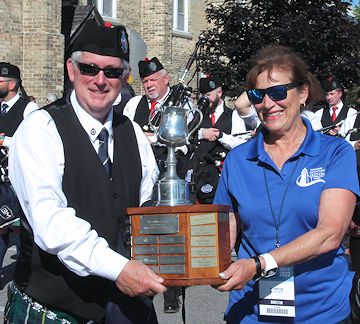
In Grade 2, the Peel Regional Police Pipe Band was first, and had the best pipe corps, best drum corps, and best bass section. In second, was the Toronto Police Pipe Band, and in third, was the Greater Midwest Pipe Band of Battle Creek, Michigan.
In Grade 3, the Guelph Pipe Band was the lone entry, taking the trophy, as well as the best pipe corps, best drum corps, and best bass section.
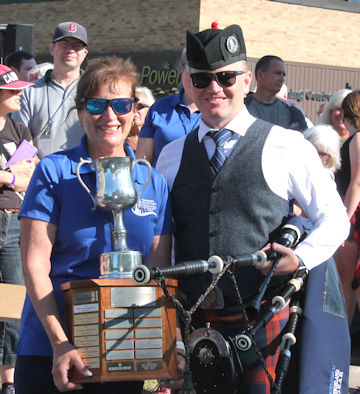
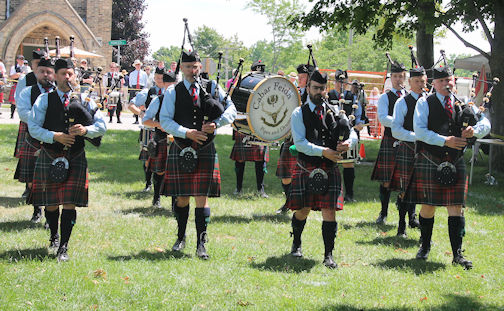
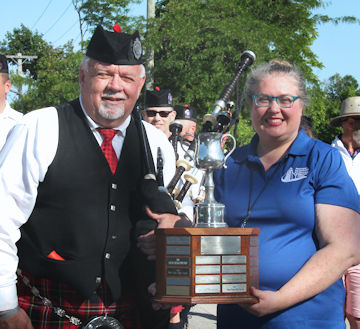
In Grade 4, the Durham Regional Police Pipe Band took first, as well as the best pipe corps, best drum corps, and best bass section, followed by the Niagara Regional Police Pipe Band, and the Guelph Pipe Band.
The Durham Regional Police Pipe Band competes at the Kincardine Scottish Festival
In Grade 5, the Durham Regional Police Pipe Band again won the trophy, as well as the best drum corps, and best bass section. In second, was the Cabar Feidh Pipes and Drums which had the best pipe corps, and in third, was the Ryan Russell Memorial Pipe Band of Toronto.
The London Firefighters Pipe Band competes at the Kincardine Scottish Festival
In solo results:
Professional Piobaireachd Piper – Ian K. MacDonald
Professional Piper of the Day – Ian K. MacDonald
Professional Drummer of the Day – Alexander Rocheleau
Amateur Piper of the Day – Brian Turner
Amateur Drummer of the Day – Harvey Dawson
There were 21 pipe bands competing, and numerous pipers and drummers in the solo competitions.
Following the awards presentations Saturday afternoon, all the pipe bands joined in a massed band, and later some pipers and drummers marched with the Kincardine Scottish Pipe Band in the Saturday Night Parade through downtown Kincardine.
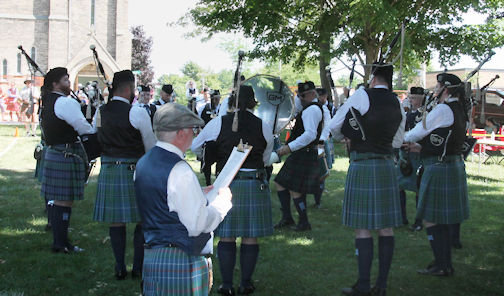
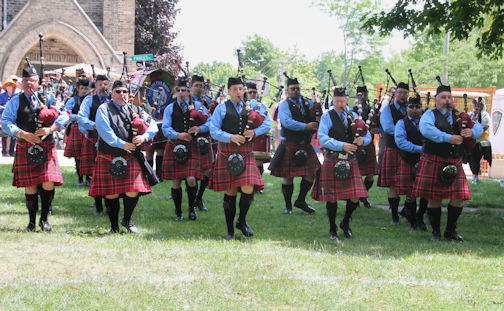
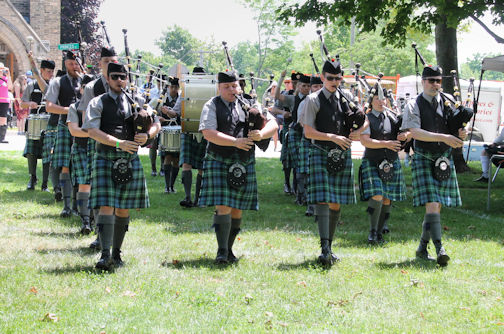
All the pipe bands gather to perform as a Massed Band, following the competition Saturday afternoon
The 78th Fraser Highlanders lead the Massed Band in "Amazing Grace"
The Kincardine Scottish Pipe Band, and some pipers and drummers from the Kincardine Scottish Festival, march through downtown Kincardine in the Saturday Night Parade; video by Liz Dadson
The Kincardine Scottish Pipe Band and friends gather after the Saturday Night Parade to play a couple of tunes for the crowd; videos by Liz Dadson
HEAVY EVENTS
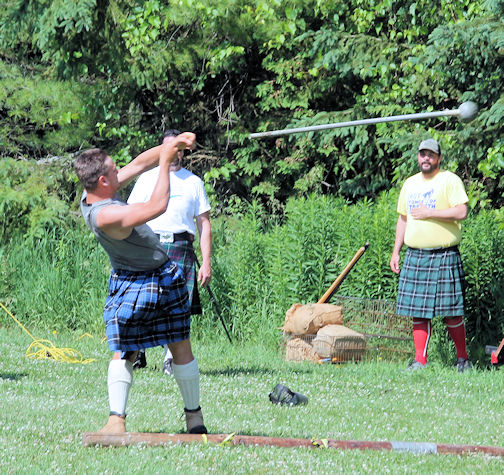
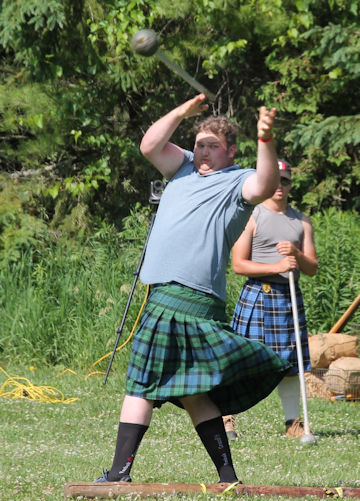
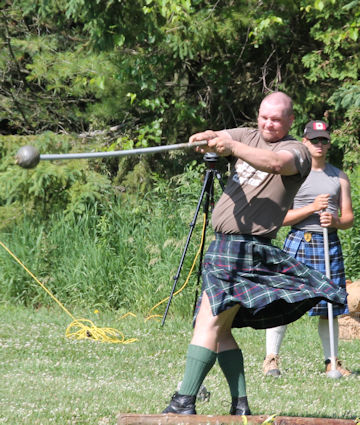
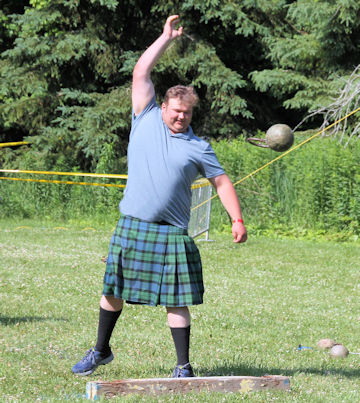
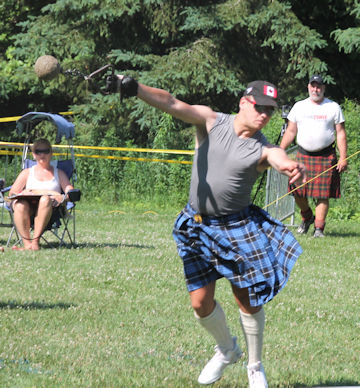
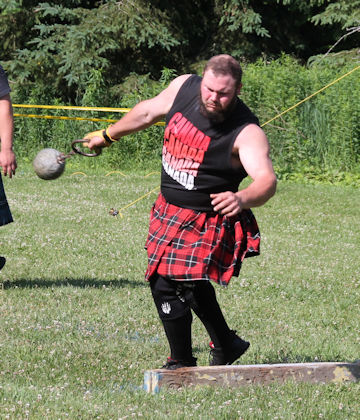
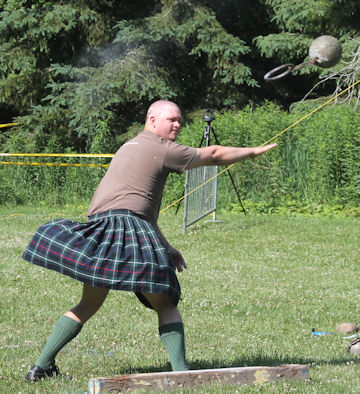
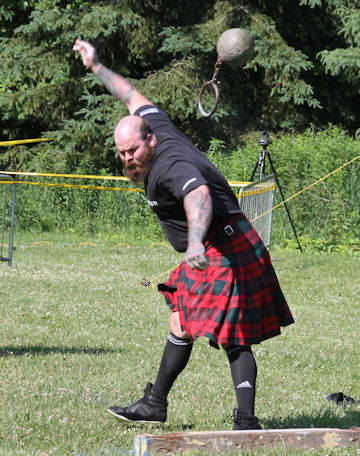
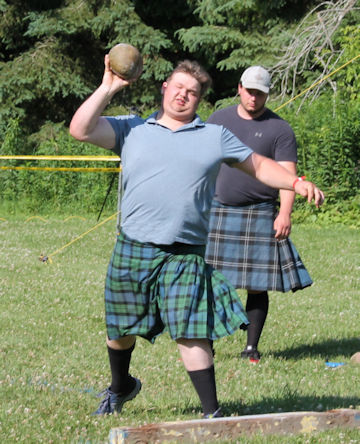
Meanwhile, down in Robinson Park, the weather was sunny and warm, perfect for the competitors - men, women and youth – who demonstrated their skills at stone throw, weights for distance, weights over the bar, hammer throw, sheaf toss and caber toss.
Stone: A stone is thrown in a style similar to the modern shot-put for maximum distance. The modern track and field shot-put has, in fact, its roots in the Heavy Events.
Weights: These weights are metal with a chain and ring handle. The total weight is 28 pounds and 56 pounds with the overall length of each implement being 18 inches. The athlete has a 9-foot run-up and must throw the weight with one hand. The object is to throw the weight as far as possible. In a separate event, the 56-pound weight is thrown for height.
Hammer: The hammer head is metal, and the shaft is wood (rattan or bamboo), or plastic (PVC pipe is sometimes used for increased durability). The total weight of each hammer is 16 pounds (light) and 22 pounds (heavy). The length of the hammer can be no longer than 50 inches in overall length. The hammer must be thrown with the feet in a fixed position, but a competitor may move his feet after the hammer is released.
Caber: There is no standard size or weight of a caber but the caber is wood and typically of a length and weight so half the competitors can turn it. The caber is ‘stood-up’ for the athlete, with the heavy end on top. The attempt begins when the caber is lifted from the ground. The thrower may take any length of run he wishes and may toss the caber from where he chooses, but the caber must pass through the vertical position in order to count as a turned caber. The "clock face” method of judging is used, as opposed to distance, such that a perfect toss will flip over and land with the small end pointing directly at 12 o'clock away from the competitor.



 July 7, 2022
1958
Related Stories
No related stories.