South Bruce 4-H Dairy Club tours Pine River Cheese factory
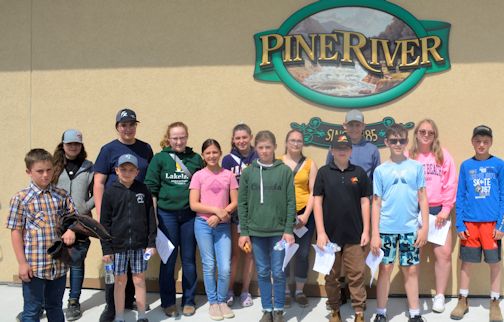
The second meeting of the South Bruce 4-H Dairy Club was held Saturday, at Pine River Cheese, located 10 minutes south of Kincardine on Highway 21.
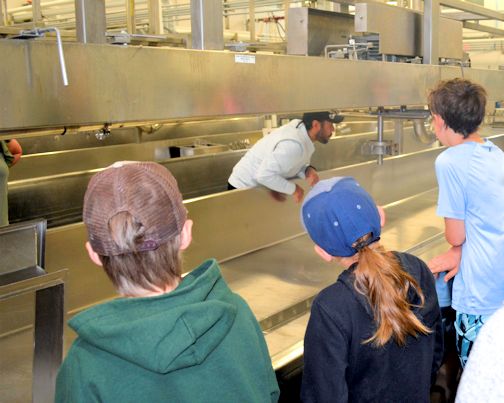
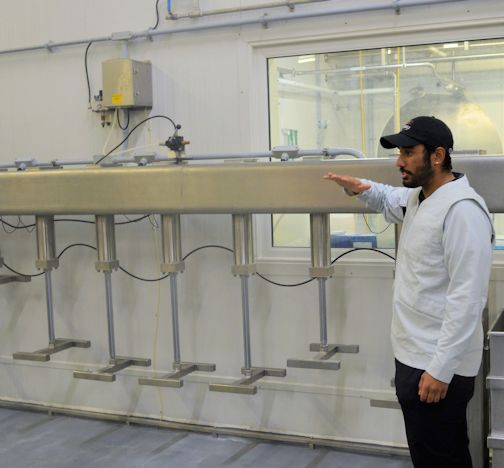
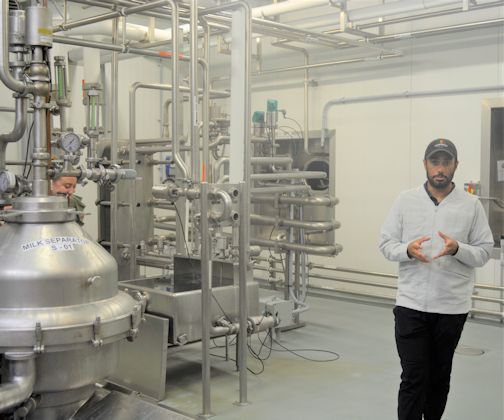
The meeting began with a tour of the cheese factory, led by Saagar Mogon and Loretta Hoggins who work in the quality control department. The club followed the path milk would take on its way to becoming cheese.
The milk is picked up at area farms and delivered, 60,000 litres at a time, twice per week to the receiving area. Before it can be pumped from the milk truck to the holding silos, Hoggins checks the milk for freshness and contamination. Because the milk is raw, it cannot be tasted; the milk’s smell and appearance determine the quality.
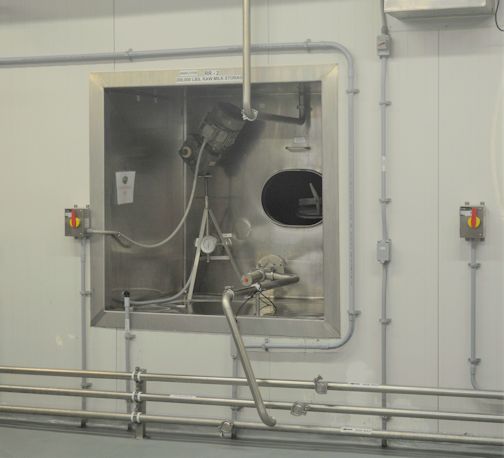
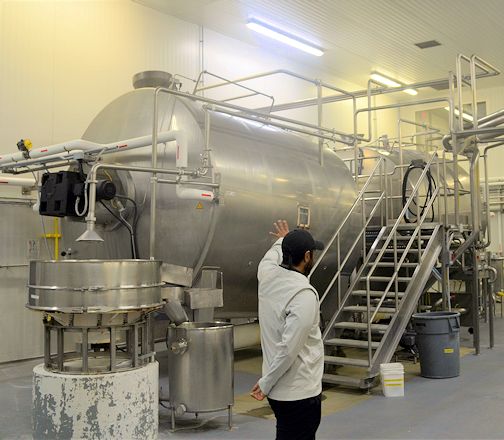
Once the milk is cleared, it is unloaded into one of the three silos, where it is stored for up to 48 hours.
The first step in making cheese is to separate off the milk fat. Mogon told the club that the milk fat can vary depending on the shipment. Milk is 87 per cent water; cheese requires a certain level of fat and protein so some of this water must be removed. All the unused portions of the milk are shipped out to be used in animal feed.
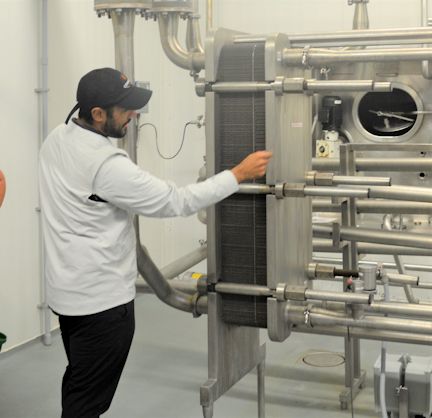
Next, the milk is pasteurized which is the process of rapidly heating and cooling the milk to kill unwanted bacteria. The pasteurizer is calibrated every two months to make sure that it is functioning properly. It can process 1,200 litres per hour.
The milk is then cooled to four degrees Celsius and placed in a new holding tank on its way to the processing room. Negative air pressure is used to keep bacteria or other contaminants from entering the processing room from the raw room.
The processing room has positive air pressure. This means that if a door is opened, the air is sucked out of the processing room, instead of allowing possibly-contaminated air to enter.
Once milk enters the processing room, the milk is heated and bacterial culture is added. The warm milk is stirred so the culture will activate, after which whey and curds are removed.
The curds are moved to the drain tables where they are drained, cut, and flipped or stirred, depending on the type of cheese being made. For example, cheddar is cut while mozzarella is stirred.
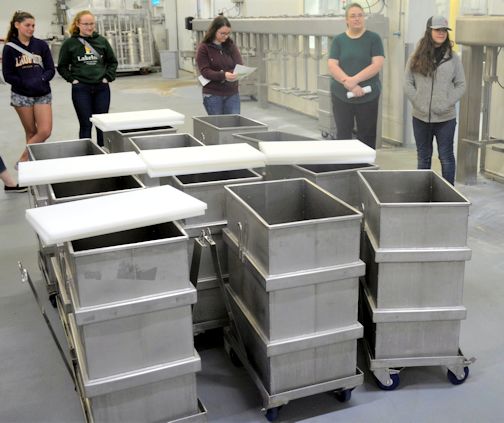
Each table holds 4,800 pounds of cheese. Once drained, the cheese is put into hoops, which look like boxes on wheels. Each hoop holds 120 kilograms of cheese. Covers are put on and they are placed under hydraulic presses at 120 PSI (pounds per square inch) overnight to further drain the whey.
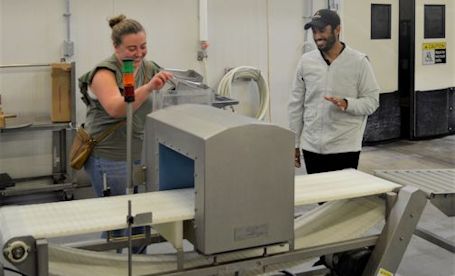
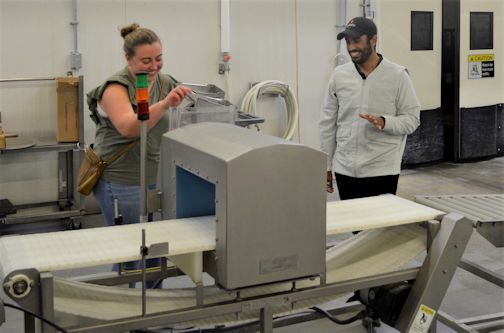
The next morning, the cheese is lifted from the hoops with a hoist and placed on a conveyor where it is cut into smaller 40-pound blocks and sent through the first metal detector. The metal detectors are used because cheese is cut with sharp metal wires and dies.
Once the cheese is moved to the packing room, it is cut into retail-size blocks, packaged, and sent through a final metal detector before it is moved to the warehouse where it is aged.
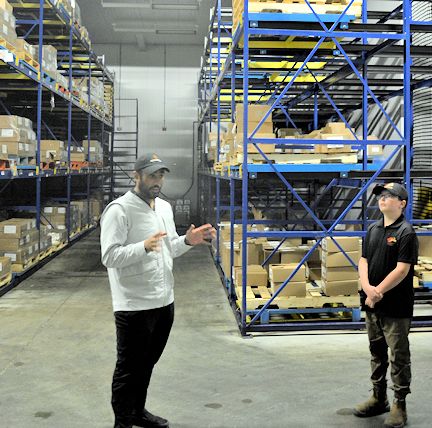
The aging time varies depending on the type of cheese, with some ready in three days (Farmer’s cheese) and others taking months to years. The oldest cheese at Pine River, right now, is five years old.
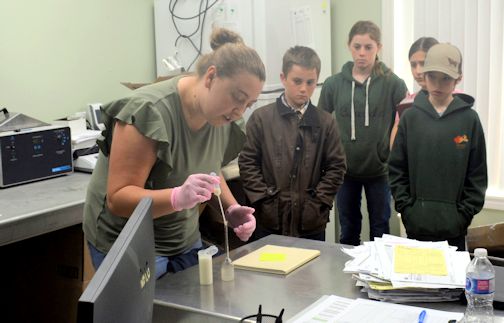
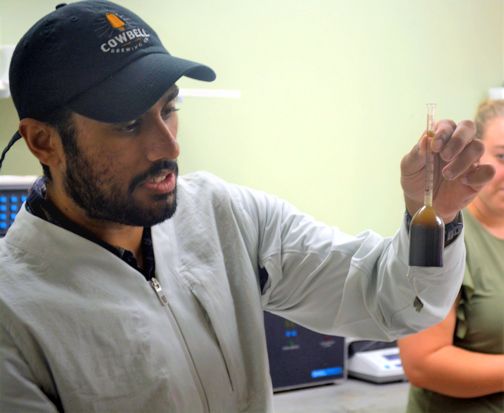
The last stop on the tour was the lab where quality control tests are run. Mogon and Hoggins demonstrated to the club how they test for milk fat in a sample of milk.
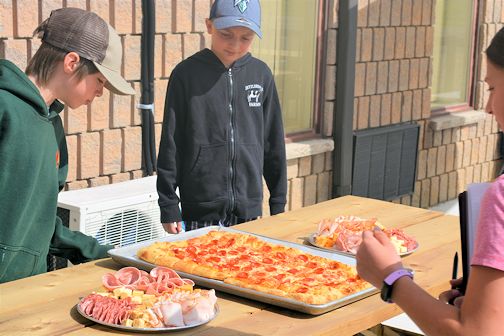
Once the tour was finished, the club moved outside to enjoy some excellent cheese samples and pizza (also made on-site), generously donated by Pine River Cheese.
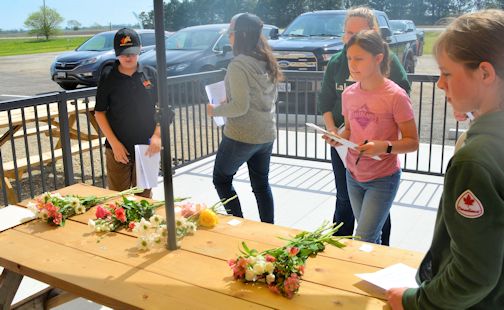
With the tour and snack finished, it was time for the next activity, judging. This time, the club was judging a class of cut flowers. Christine Weber (one of the leaders) explained the scorecard and some of the terminology.
After judging was finished, Jaclyn Bell (one of the leaders) went over bio-security with the club in preparation for the upcoming farm tours and shows.
The South Bruce 4-H Dairy Club thanks Pine River Cheese for hosting the club and providing the snack which was greatly appreciated.
The next meeting will be held June 10.
 Written By
No bio for this author.



Related Stories
No related stories.