South Bruce 4-H Dairy Club tours Belmoral Farms near Teeswater
The third meeting of the South Bruce 4-H Dairy Club was held at Belmoral Farms, located outside of Teeswater.
Belmoral Farms is currently owned and operated by Mitch Kieffer, along with his parents, David and Annamae. Mitch joined the operation, full-time, in 2011, making him the third generation to be involved with the dairy and the fifth generation on the farm.
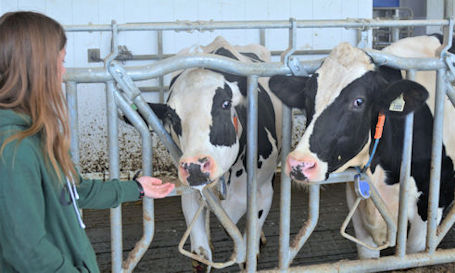
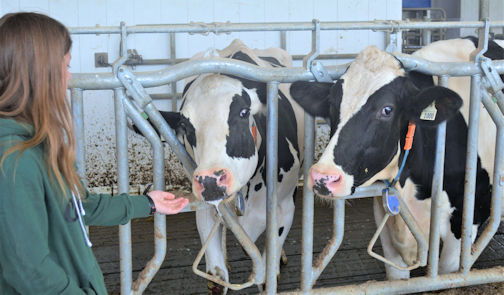
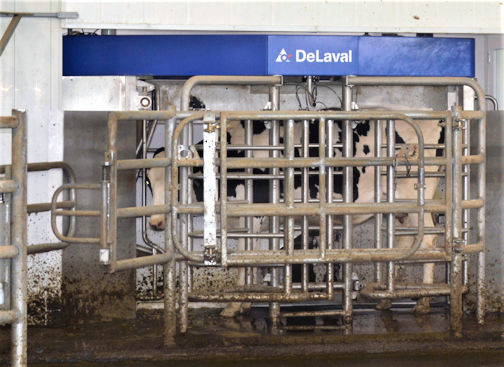
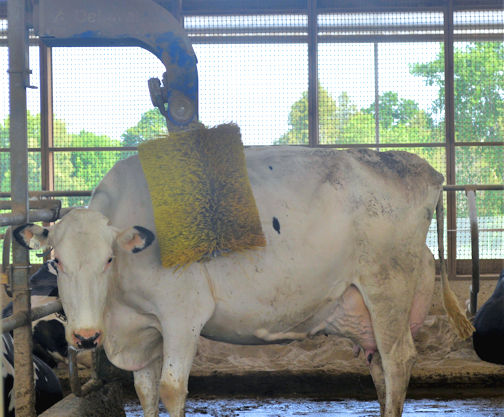
The meeting began with a tour of the new barn where the milking cows are housed. The free-stall barn was built just under two years ago, with two Delaval Robotic Milkers.
The first stop on the tour was the utility room where the club members watched one of the robots in action. Kieffer explained each of the steps the robot takes when it milks the cows. Firstly, it washes the udder with soapy water; then, it hooks up the milker and milks the cow.
While the cow is being milked, the robot samples the milk to monitor for mastitis and heat cycles. When the cow is done being milked, the robot applies post-dip to the udder.
If the cow is in heat or needs treatment, the robot sorts her into a holding pen so Kieffer doesn’t have to catch the cow later; thereby, reducing the stress on the cows. Otherwise, the robot lets the cow back in with the main herd.
The robot washes itself before letting the next cow in. Kieffer said that depending on the Somatic Cell Count of the previous cow, the robot can do a second wash, itself, to keep from infecting the next cow.
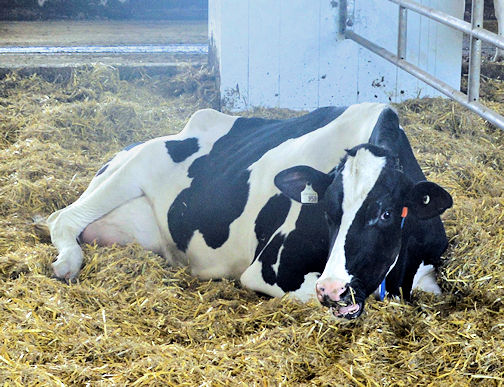
Next, Kieffer showed the club the pens where the closed-up heifers and fresh cows are housed. Because they are at higher risk of milk fever and other post-birth complications, it is important to make sure these cows are getting up and eating. Keeping them separate allows Kieffer to monitor them closely to make sure all the animals are healthy. Once the cow is far enough past calving, it is returned to the main herd.
The club members then made their way over to the new calf area and Kieffer went over the farm’s calf care. When a calf is born, it is put into a small pen at the front of the milking barn. The calf’s mother is milked and her colostrum is tested with a refractometer to check the antibody quality.
The cow is vaccinated before she calves and this increases the amount of antibodies in the colostrum. If the colostrum quality is not high enough, Kieffer will add powdered colostrum to increase the quality. The first month is the most important parts of the calf’s life, as it can easily get sick. If the calf gets sick, it can be stunted for the rest of its life.
To strengthen the calf’s immune system, it is vaccinated. After a few days (or weeks depending on the weather), the calf is moved to a hutch where it lives for a couple of months. After the calf is moved out, the pen is washed and disinfected to prevent any diseases spreading to the next calf.
The last stop on the tour was the heifer barns. After the new barn was built, the old one was renovated to convert it from tie-stalls to heifer pens, housing the younger heifers. When they get older, they are moved to a separate barn where they are bred.
Once the tour was finished, the club members moved onto the next activity, judging. Having learned how to judge and use a scorecard at early meetings, the club learned how to judge a class without a scorecard, in preparation for the Grey-Bruce Judging Night in August.
When judging a class, you should always ask yourself, what is the purpose of the items you're judging? Every class has a title. This tells you what you are judging the class on; for example, Fall Dairy Heifers or Reusable Lunch Kits. The club practised judging a class of Farm Footwear which included everything from a steel-toed rubber boot (first place) to sandals (last place).
When the members were done judging, they completed a crossword puzzle to review what they had learned on the tour.
The meeting ended with discussion about the next meeting and upcoming shows, while enjoying a snack which was generously provided by the Kieffer family.
The South Bruce 4-H Dairy Club thanks Mitch Kieffer for taking time out of his day to show the members around his farm, explaining his operation, and providing a snack.
The next meeting will be July 8 in Teeswater.
 Written By
No bio for this author.



Related Stories
No related stories.