South Bruce 4-H Dairy Club busy with judging, showing calves and touring dairy farm
August has been a busy month for the South Bruce 4-H Dairy Club, starting with the Grey-Bruce Judging Competition, Aug. 2.
The club has been practising judging at each meeting in preparation for the competition. This year, there were eight classes. In four of them, competitors had to give reasons and the other four were non-reason classes.
Once the judging was finished, members enjoyed pizza and games while the points were tallied. When the results were announced, the club did well, with five of the seven who competed placing in the top five for their age groups.
A few days later, was the Lucknow Dairy 4-H Invitational. This is the largest one-day 4-H Dairy Show in Canada. There were more than 120 competitors.
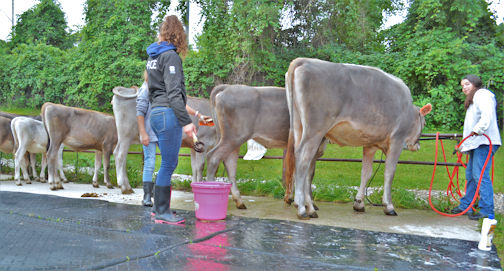
Six members of the South Bruce Club attended the show. They were up early in order to have all the calves ready before the show started. The first of the calves arrived in Lucknow before 5 a.m. By 8 a.m., the South Bruce pack was buzzing with activity. At the end of the day, everyone was tired but it had been a good show.
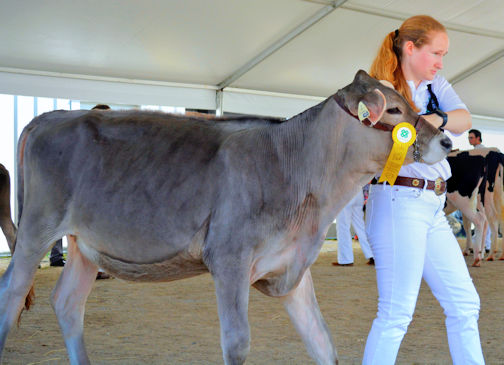
Next, was the Hanover Brown Swiss Breed Show. Breed shows are different than 4-H shows. In a breed show, only heifers and cows of that particular breed can be shown. The members showing Brown Swiss calves this year did well, with all of them finishing in the top five in either junior or senior showmanship.
Two weeks later, three members drove to Elora for the Grand River Dairy Show. This was the fourth qualifier for the Bruce County TD Classic Dairy Team. By now, the members and their calves were getting used to the show day routine. Late nights before getting everything ready, followed by an early morning, a long drive, and a full day of showing.
The last show in August, was the Bruce-Grey Holstein Breed Show. Here, the members showing Holsteins placed very well in both showmanship and conformation, with several firsts being won.
Each show was a little different. But overall, the club has done well with multiple high placings at the shows.
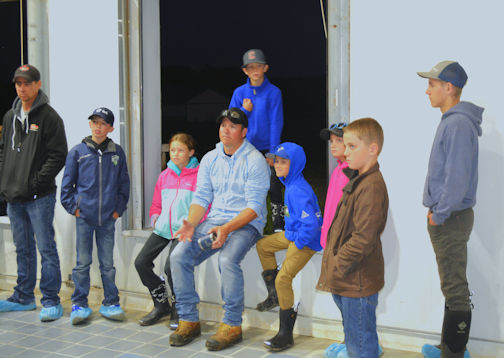
The club also held its final meeting, Aug. 30, at Ikendale Farms, near Walkerton.
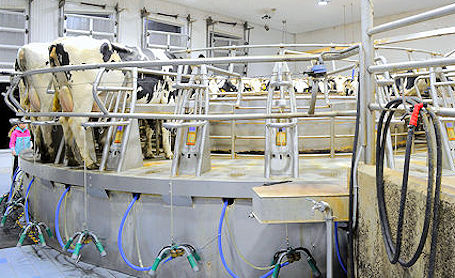
Started in 1952, this was one of the first farms to adopt quota when it came in. The owners are currently milking 410 cows in a 30-stall rotary parlour. They farm 2,000 acres including the land they own and rent.
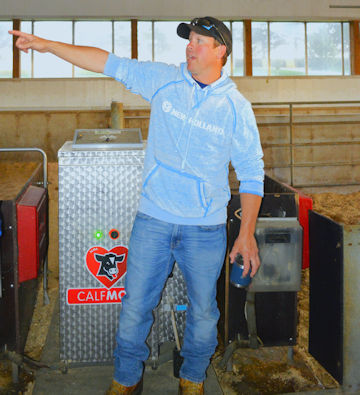
Tyler Kuntz (third generation) led the tour, starting with the “Hospital Barn.” Built in 1980, it was the milking barn. When they upgraded to a new barn with a rotary parlour in 2005, the old barn became the hospital barn where the fresh cows and treated cows are milked in the old double-eight parlour.
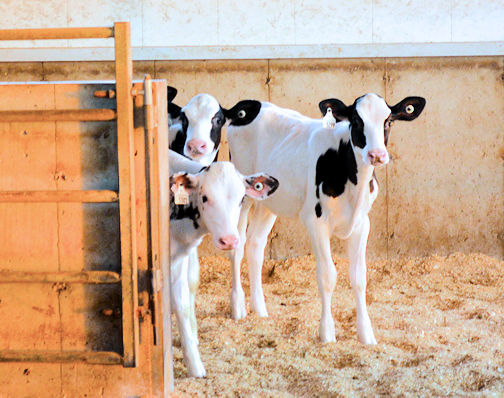
The next stop on the tour was the calf barn. After being born in the hospital barn, new calves are moved here where each calf is housed individually and fed colostrum from its dam. At three to five days old, the calf is moved to a group pen where it is fed by a robotic milk feeder until it is weaned. Once a group of calves is weaned, it is moved to the heifer barn. The pens are cleaned between groups of calves to prevent disease transmission.
By then, it was time for milking to start. While the club walked up to the milking barn, Tyler explained the different crops that they grow and how the crops are used to feed the more than 900 cattle on the farm. This year, they tried growing winter canola for the first time. In the past two years, they have built bunker silos in order to store more of the forage on the farm.
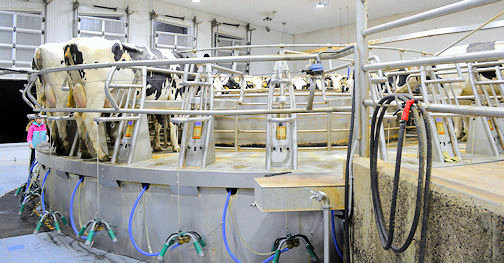
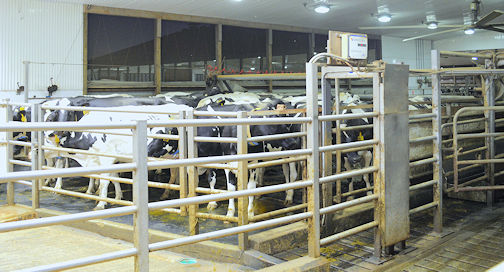
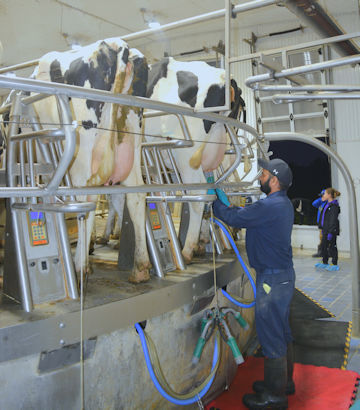
Once the club members reached the milking barn, Tyler showed them the rotary parlour. Unlike other parlours, where the farmer walks up and down milking the cows, this one has the cows load into the parlour which slowly rotates, so the farmer can stand in one spot, washing udders or putting on milkers.
Also, unlike other parlours which can milk only a limited number of cows before reloading, the rotary parlour doesn't stop. The cows load and are milked as the parlour spins, and when the parlour has completed a full turn, the cows are finished milking, back off the parlour and walk back to their pen.
Tyler told the club that they milk three times per day and each milking takes four hours. In order to keep everything running smoothly, Ikendale Farms employs more than 20 employees, including two herd managers.
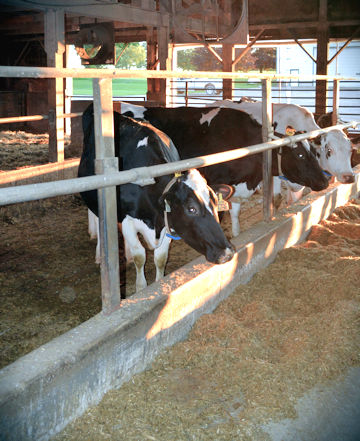
After watching milking for a while, the club finished by touring the free-stall barn, where the cows live, and the heifer barn. The club ended the meeting with the year-end quiz, reviewing everything the members have learned this year.
The club members thanked Tyler Kuntz for taking the time to show them around the dairy operation and explain how it works.
The club’s achievement day show will be held at the Mildmay Fall Fair.
 Written By
No bio for this author.



Related Stories
No related stories.