NIMBY: Nature in My Back Yard – Leave the leaves
I love life in Bruce County in every season but the pleasures of autumn seem extra special: crisp, cool air, harvest from the garden, fall fairs, the changing colours of the leaves, and my grandkids jumping in piles of leaves.
For some, fallen leaves are a playground. For many, however, they’re a headache.
Once the leaves settle on the ground, they’re often referred to as “leaf litter.” This term speaks volumes about society’s relationship to nature as litter implies that leaves are a waste product, something to be cleaned up and disposed of, when in fact, fallen leaves are a positive benefit to the environment.
Those leaves collecting in gardens, on lawns or around the base of trees, are natural habitat for butterflies, moths, bumblebees, fireflies, frogs, toads and others. Many insects over-winter as eggs, larva or adults, camouflaging themselves in the leaves, and more than 70 species of moth caterpillars feed on the dead leaves.
Many families in Bruce County have ties to the area going back generations. I’m sure many readers have remarked at one time or another that there seem to be fewer birds, fewer butterflies, bumblebees, and fireflies; fewer insects, in general, than in years past. We remember when our car windshields and grills would be covered with splattered bugs in the summer. The lack of insect splatter actually has a term – windshield phenomenon – and was written about by Canadian entomologist John Acorn. It is an indication of insect population decline which is due to many factors, such as pesticide use, loss of habitat and climate change.
Why should we care about these tiny, and sometimes pesky, creatures? They are the pollinators of our food crops and flowers, the base of the food chain that feeds birds, amphibians, reptiles and mammals, and decomposers of organic matter. These creatures maintain balance in nature but when we bag and dispose of our leaves, we send the next generation to their death. Leaving your leaves is a simple, yet impactful, way to increase habitat for wildlife.
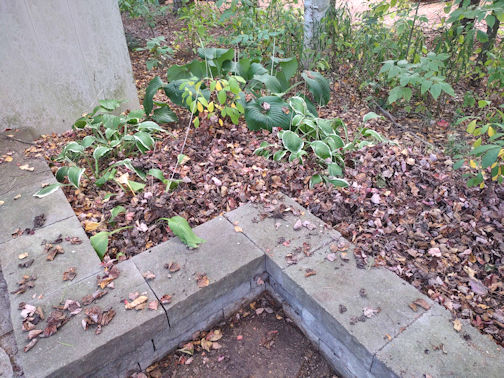 A flower bed is mulched with leaves in September, 2024
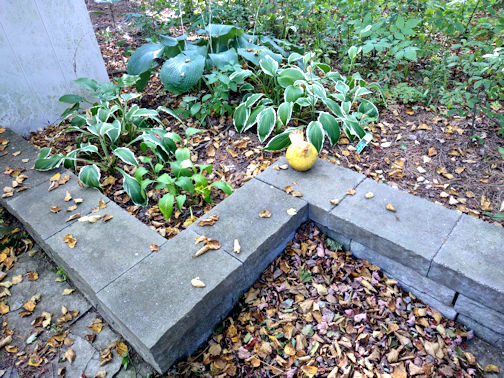
A year later, the leaves have largely decomposed and disappeared
It goes against our modern urban aesthetic (a topic for another time) to allow our yards to be covered with leaves. We feel an urgent need to “tidy up” our yards to prepare for winter. However, those fallen leaves contain the nutrients used by our trees the previous growing season. By tolerating a more natural look, we will find that nutrients are recycled and become available for trees, plants and lawns to be used again next year. Think of decomposing leaves as free fertilizer.
Certainly, traffic areas, such as walkways, must be kept clear for safety but extra leaves can be raked under bushes or onto flower and vegetable gardens to provide mulch and winter protection. They’ll suppress weeds, preserve moisture and naturally compost.
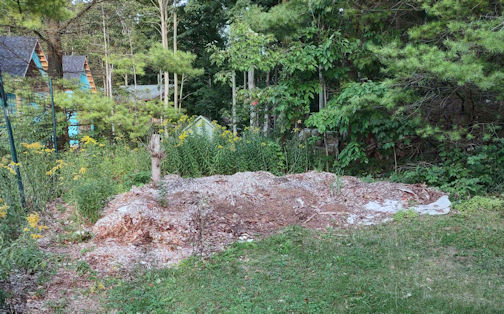 The leaf pile gradually decomposes and becomes leaf mold
Too many leaves? Add them to your composter or make a big leaf pile in a corner of the yard. They’ll break down and form a type of compost called leaf mold that can be added as natural fertilizer around plants in the spring.
As much as possible, divert leaves from the landfill where they take up valuable space. Composting leaves produce less methane, a potent greenhouse gas that contributes to the global climate crisis.
As mentioned in the previous column, never dump yard waste in unauthorized or wild areas. Harmful invasive plant species can be spread this way.
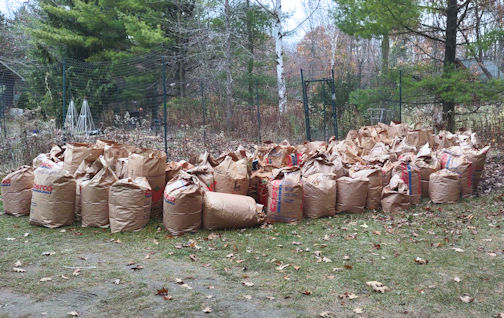 Bags of leaves are diverted from the landfill in 2024 and used as mulch on gardens, and the remainder piled for composting
The stated goal of this column is to help people connect with nature through sustainable, natural gardening practices. Become part of the eco-system by leaving leaves on the ground. They’ll provide nourishment for the soil and plants and shelter for wildlife. You’ll save time, effort and resources and the environment will reap the benefits.
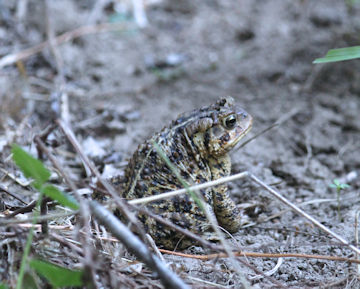 Sighted in a flower bed, Sept. 14, we hope this toad will find a good spot to over-winter in our yard
 Written By
Christine Roberts is a retired elementary school teacher, past-president of Huron Bruce Nature, executive member of the Ripley and District Horticultural Society, volunteer for the David Suzuki Foundation, VON volunteer fitness leader and a passionate lover of nature.






Related Stories
No related stories.