




 September 22, 2026
552
September 22, 2026
552

Four candidates are running for the three councillor-at-large positions in the Municipality of Kincardine, in the Oct. 26 municipal election.
Here is an opportunity to meet your candidates and learn about their platforms.
There are also two all-candidates meetings scheduled: one hosted by the Kincardine and District Chamber of Commerce, Sept. 29, from 6-8 p.m., at the Davidson Centre in Kincardine; and the second one hosted by the Kincardine Agricultural Society, Oct. 1, at 7 p.m., at the Armow Hall.
MIKE HINCHBERGER
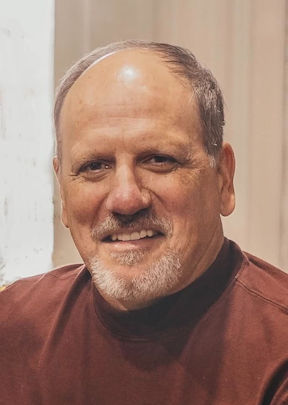 Mike Hinchberger and his wife, Tracey, live in the Town of Kincardine where he has been a full-time resident for the past 37 years. They are the proud parents of three daughters, aged 21-34. Two live in Kincardine, while the youngest is attending post-secondary school.
He was born and raised in Sarnia and attended post-secondary school at the University of Western Ontario (now Western University), in London, graduating with a BSc (Honours) in Chemistry in 1988.
In June of 1989, he was hired by Ontario Hydro and began work at the Bruce Nuclear Power Development. His 31-year career evolved across chemistry, environment management, and operations. He was certified by the Canadian Nuclear Safety Commission as a Bruce B control room supervisor in 2009, a shift manager in 2011, and achieved a duty manager qualification a few years later.
He was the Assistant Operations Manager (AOM) – Shift at Bruce B from 2016-17, the AOM – Training from 2017-19, and the Director – Operational Focus from 2019 until he retired as a Bruce Power employee in August, 2020. At one time or another through these roles, his organizations contained staffing of more than 200 people and annual budgets in the tens of millions of dollars, comparable to the entire Municipality of Kincardine.
Hinchberger is running for re-election to the councillor-at-large position in Kincardine because he has always been more motivated to do something that he thinks matters, and something from which he can learn and grow, rather than simply getting a paycheque or having a title.
"Like I said in 2022, I have no interest in being deputy mayor or mayor," he says. "I enjoy the satisfaction of helping someone get a better mental picture of how the municipality operates and helping them in the direction that gives them the best chance of getting their desired result, even if I don’t personally support it. It helps them and it helps me get better at my job. I like the policy-making function of council, especially when it results in a process that runs with little council involvement, leaving councillors more of their time to think strategically and set a course for the future.
"I thrive on the debate with my colleagues, even when it sometimes gets a little heated. Kincardine is a very good place to live. It can be better. I’d like us to be the envy of rural Ontario."
With four years of experience under his belt as councillor and currently, interim deputy mayor, Hinchberger says he has very little learning curve.
"I have years now of working knowledge of all the provincial legislation and municipal policies that a council must work under," he says. "I’ve gone through the teething pains in developing professional, productive working relationships with staff members in the organization based on mutual respect and the understanding that council sets policy and the administration implements it. I know what the organization does well and where there is room for improvement. I know how to indirectly perform oversight of the administration given that councillors do not have the authority to directly observe staff.
"I think I’ve demonstrated that I bring a principled, reasoned, practical approach to council. I make decisions based on a thorough review of a situation, assess whether a problem exists, identify and evaluate possible solutions, and propose or support an outcome that I think is in the best interest of the public now and in the future and not simply based on which group I might hear most loudly from. I see myself representing the residents who aren’t directly involved in the 'conversation'.
"With respect to my rivals for councillor-at-large, as I watch them campaign, the bigger challenge than identifying issues that people say YES to is navigating the NO group that invariably will rise to oppose the change that comes with it. This is very real and it is impeding the progress we need to make."
Hinchberger believes that he has moved, or is moving, the needle on a number of fronts. Some highlights:
Chaired the committee that produced the natural vegetation policy and private tree bylaw that was approved by council.
Injected himself into addressing a situation involving encroachment onto public land and ensuring public access to the shoreline in the Birchwood Subdivision of Ward 2.
Brought forward the action from the 2022 Housing Action Plan that called for the identification of lands surplus to core municipal needs and could be considered as sites for the development of affordable housing.
Sits on the board of directors and transaction committee of Westario Power as it navigates its acquisition by ERTH that he believes will be bring more financial stability and flexibility to the municipality.
Represented council on the Business Improvement Area (BIA) board of management and proposed, and got passed, a resolution to implement three-hour parking limits in downtown Kincardine to support retail businesses.
Assumed Doug Kennedy’s role as the municipal representative on the Saugeen Mobility and Regional Transit (SMART) board of directors, picked up his vision of restoring additional hours of service here, and gained the necessary support from council to make it a reality.
Proposed, and gained support from council on, a resolution for staff to produce a forecast of the operating surplus of the current year BEFORE council considers the budget for the next year, because he didn’t like the experience of stressfully grinding through a budget only to find out six months later when the annual financial reports were presented that the municipality ran a $1-million surplus.
Proposed, and gained support of council, to have staff develop a comprehensive communications policy because he felt that council had room to improve in telling the public its story.
Chaired the Chief Administrative Officer (CAO) Recruitment Committee that guided council through the selection of the new CAO.
And the one that gives him the most recent satisfaction: Nurtured an issue that began with a resident raising a safety concern with the Bruce Avenue/Penetangore Row intersection in 2025, saw it through the Service Request process, didn’t let it go when the project to solve the problem was left out of the 2026 draft budget, obtained the necessary data to convince council the issue was real, and then monitored it through to completion.
"I am also confident in saying that I am in the top three of members of council who communicate with the public via social media," says Hinchberger. "I believe that, with a possible exception, I am respected by my colleagues."
He says the municipality's top priorities are:
Asset Management which means how to plan for, and carry out, the rehabilitation and replacement of the municipality's $1-billion-plus assets, including roads, bridges and culverts, water, wastewater, and stormwater systems, buildings and facilities, equipment, etc., in an era of spotty funding from provincial and federal governments.
"With a financial analysis that calls for a six-plus-per-cent increase in the municipal levy, annually, over the planning horizon, and a choice of council's past and present to limit the annual tax increase for this purpose to three per cent, you can see the problem," says Hinchberger. "My approach to address this has been to support increasing the tax base through the approval of development applications, convert existing assets (Bruce Telecom and Westario Power) into other forms that provide better rates of return, and vote to delay the implementation of some projects (Davidson Centre track, standby power system) in light of future changes that might affect them (new senior school), downsize the proposed scope of others (lighthouse staircase), or walk away from some assets entirely (Princes Street footbridge).
"This issue is not unique to the Municipality of Kincardine. Too many years have gone by after things were built without governments preparing for their repair, rehabilitation, or replacement."
Affordable Housing - Bruce County has established overall housing targets for the next 10 years, further broken down by segment of the housing continuum.
"In the below-market rental and home-ownership segment, our target is 160 new residential units, divided between the public and private sector," says Hinchberger. "The call is out, yet again, for the lower-tier municipalities to support this through means that include making land available. We’ve completed most of the actions related to planning processes, but we need to return to the surplus land discussion, learn some lessons, and return to the W.E. Thompson site discussion."
Preparing for the very real possibility of Bruce site expansion - The arrival of Ontario Hydro here to build Douglas Point in the 1960s created opportunity and disruption, as did the construction of Bruce A and B in the '70s and '80s, and the Bruce Power Life Extension program currently in progress.
"We need to work with Bruce Power and senior levels of government as partners with a vision of seeing this as a win-win scenario, and not a win-lose one," says Hinchberger. "With three decades of experience in the nuclear industry and four years of council under my belt, I believe that I am uniquely qualified to be a part of this journey."
MICHAEL McKECHNIE
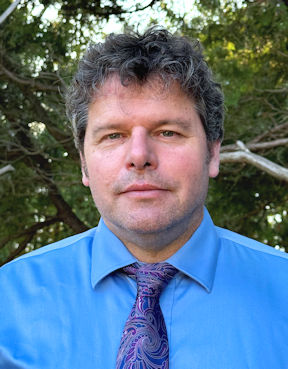 Michael McKechnie was born and raised in the Kincardine area. After high school, he went to the University of Toronto and obtained his Bachelor of Science in Pharmacy. He met his wife, Natalie, at university.
After working in the London area as a pharmacist for nine years, he and Natalie moved back to Kincardine to raise their two children, Dylan and Riley. They purchased his parents' business, McKechnie Pharmacy, in 2011, and ran it for 15 years until their retirement in May of this year.
"During our time running the pharmacy, we won the Kincardine Business Improvement Area (BIA) Customer Service Award twice," says McKechnie. "The success we saw in the pharmacy was directly related to the teamwork of our staff, and the relationships we formed with patients, the physicians, their staff and the Family Health Team. Running a successful small business has taught me many skills and, if elected, I look forward to bringing these experiences to the council table."
McKechnie says he chose to run for council as a way to give back to the community that has supported his family for decades.
"Our community has a very bright future as we prepare for the future expansion of Bruce Power," he says. "As a municipality, the policies and procedures that are being adapted today, must be forward-thinking and prepare us for the future. It is a critical time to have an effective municipal council that can work as a team to navigate a successive pathway forward. If elected, I look forward to the chance to be part of this team."
McKechnie says he brings to the council table someone who is professional, open-minded, hard-working and willing to listen.
"As a pharmacist, local business owner and community member, I have spent decades listening to people and helping solve everyday problems," he says. "I will bring that same practical, thoughtful approach to the decisions shaping our municipality."
He says the top three issues facing the Municipality of Kincardine are:
The lack of affordable housing - The municipality lacks subsidized housing and housing for families that have below-median incomes.
"Other municipalities, that are having some success in building rent-geared-to-income and affordable housing, were able to provide land to Bruce County or non-profits to build housing," says McKechnie. "Ideal locations for this type of housing tend to be close to amenities, such as grocery stores, health care and other basic essentials, because transportation can be an issue. Having discussions with landowners close to these areas to determine their interest in future development, are a must. As Kincardine grows, we need to ensure new developments include more attainable and workforce options."
Responsible growth - With the proposal of Bruce "C," there is a push for growth in the municipality.
"Many people question if the growth in Saugeen Shores is sustainable," says McKechnie. "There are questions about the ability of their infrastructure and waste management to keep pace with the continued growth. As a municipality, we need to work toward a 50- to 60-year plan, ensuring the infrastructure and designs are expandable and the long-term servicing and infrastructure costs are calculated and a funding plan is in place before we develop. We need to welcome investment in our community but still respect agricultural land, the environment and the character of the community. Further, to succeed, we need to build constructive relationships with responsible developers and local business."
Value for taxpayers - The cost of living in Kincardine is 31-per-cent higher than Canada’s national average.
"With this higher cost of living, it is vital that we are looking for value for the taxpayers," says McKechnie. "We also need to ensure we are asking for cost alternatives before deciding on major spending. We should look for efficiencies that will allow us to work smarter and be more cost-effective. Regularly, we need to review services and partnerships to make sure we are not duplicating services and our resources are being used to their fullest. Finally, we need to have clear objectives and regular public reporting for major projects."
DARREL PERRY
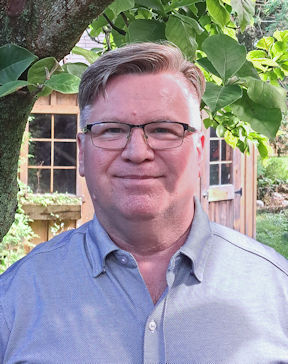 Darrel Perry is a dedicated husband and father of two young adults. Back in March, 2014, he and his wife packed up their life in Toronto and moved to Kincardine for a better life for their kids. Twelve-and-a-half years later and their family business, Penetangear, on Queen Street, Kincardine, is a successful, multi-award-winning local business.
"I was born in Australia and immigrated to Canada in 2003," says Perry. "I have a Bachelor of Business Degree in Marketing and International Trade and enjoyed a career as a consumer goods marketing professional from 1998 to 2014."
Put simply, Perry is running for council because he believes he can make a difference.
"It's time for a change," he says. "Considering the financial challenges and tremendous opportunities facing the community in the coming years, we need councillors who can be strategic planners, have strong collaborative skills, and can connect with the community to understand what’s important to them. Our kids have recently moved away to attend university and so the time is right. I’m confident that I have everything it takes to make a difference for the next four years and beyond."
After 12 years on the Kincardine Business Improvement Area (BIA) board, Perry feels that his extensive experience working with municipal staff, councillors and business leaders on major municipal projects, has offered great preparation to run for council.
"It's been like a 12-year apprenticeship," he says. "Combine this with my success as an award-winning Kincardine family business owner, and long-term collaborations with many local charities, and I feel that, if elected, I can have an immediate impact."
Perry believes the top three issues facing the municipality right now are as follows:
With increasing costs, families are having to make hard decisions to balance their monthly budget. The municipality must do the same. "I think voters understand that it costs money to run things. What voters are confused about is why we need to spend money on hiring outside consultants to do surveys on projects that seem to be a nice to-do but not a priority."
There is an urgent need to understand the health of the municipal infrastructure and its ability to work optimally for its use, now and in the future. "The municipality is significantly behind in managing this basic responsibility. We recently experienced the consequences of this decision with the wastewater lagoons."
It's time for a change. "The community feels disconnected to the decisions and priorities made by council. With growth in the region, we need to plan for how we can maintain the heart and soul of what makes the Municipality of Kincardine a special place to live."
ALI SHAH
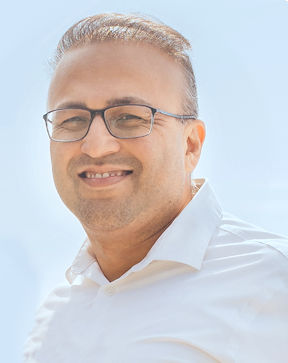 Ali Shah and his wife moved to Kincardine five years ago with their five boys, all of them in local schools. They live in town and he works from here.
"I've run an analytics consultancy since 2008, built tech businesses, and owned and operated a franchise restaurant," he says. "I studied information technology and marketing at the University of Alberta and York University, and I've kept adding technical certifications since.
"Around town, you'll mostly find me at the karate dojo and soccer fields. I coach with Kincardine District Minor Soccer, I've done my Soccer Canada courses, and I still play in the adult league with friends."
He is running for council to do two things: bring down what it costs to live here, and get this municipality ready for what's coming.
"An ordinary week in Kincardine costs more than it should, and the drive to Port Elgin for what's missing is how a lot of us deal with it," says Shah. "Twenty minutes the other way, someone is deciding whether to build the largest thing this region will see in a generation. Council doesn't decide Bruce 'C.' Council decides whether Kincardine is ready for it: housing, wastewater, serviced land. Bruce County's own plan says we'll be about 15,400 people by 2046. My boys will be in their 20s and 30s by then, deciding where to build a life, and so will a lot of other people's kids. One line has ended up on everything I do: a town our kids can afford to come back to."
His experience doesn't come from a council seat.
"What I bring is the other side of the municipal table," says Shah. "At the Region of Peel, I worked on the team that modernized waste collection across Mississauga, Brampton and Caledon, about a million-and-a-half people, and I saw how municipal service contracts actually work from the inside. That matters here, because Kincardine's waste collection contract expires Dec. 31, six weeks after the new council is sworn in. I've managed construction projects of my own, so I know what payments tied to completed work and real timelines look like.
"I've also done the homework. I've read the 2022 Asset Management Plan and its 2025 addendum, the 2013 airport strategic plan and the 2026 budget, and I've been working through years of council minutes since last December. When the province asked for comment on its data centre rules this summer, I wrote a submission and filed it before the deadline, because Kincardine will be on that map whether we plan for it or not.
"Every number I use in public comes with a source. I'm spending September asking residents one question a week and writing down the answers before I publish a platform, because I'd rather build it from what people actually say than guess."
Shah says the top three issues facing the municipality are:
Affordability - Rental vacancy has been zero per cent since 2016, in the municipality's own words in a 2024 federal filing, and the everyday costs keep stacking.
"A garbage bag tag is $3.50 here and $2 in Saugeen Shores," says Shah. "Two grocery stores serve more than 12,000 of us, so a lot of what we need means a drive. Council doesn't build homes or open stores, but it does control the wastewater capacity, the approval timelines and the development charges that decide whether anyone else can. The waste contract renewal this winter is the first place a new council can act, and some fixes are nearly free. Ontario expects a municipality our size to offer backyard composters at cost, and a $20 composter cuts enough bag volume to pay for itself in tags within the first year. Affordability is the cost of an ordinary week, not just the mortgage."
Built once, built right - The municipality's Asset Management Plan says Kincardine underfunds its infrastructure by about $11.2-million per year, and the 2025 update priced everything about one-third higher without changing that math.
"Roads are the single biggest line," says Shah. "The lagoon needs to be engineered properly instead of patched again. Wastewater capacity quietly decides whether we're allowed to say yes to housing at all. The new high school shows what waiting costs: a build approved at $26.4-million in 2019 is now $57.7-million, and the parts council actually owns, the site plan and the servicing, should never be the reason for another year of it. There's a near-term test too. Ontario's sport and recreation fund covers up to half of a new build and applications close Dec. 22, again six weeks after the new council is sworn in. Kincardine should hit that deadline with grant-ready cases instead of watching it pass."
Our fair share - Kincardine hosts the largest operating nuclear station in the world, and the site's share of the municipal levy fell from 50 per cent in 2008 to 18 per cent in 2024.
"The provincial assessment model for generating stations has never been adjusted for inflation, and residents absorbed the difference," says Shah. "With Bruce 'C' moving toward a decision, the next council has to secure a host arrangement that matches what hosting actually costs us. Tourism should help pay for the municipality that hosts it as well, through an accommodation charge and visitor paid parking, with residents covered by permits. Getting our share is how we pay for the municipality we say we want.
"One last thing - You don't need to wait for a debate or a doorstep to talk to me. If something on your street or in your bills isn't working, or you just disagree with something I've said, write me or call me. I'd rather hear it than not, and if it's something council can fix, it goes on my list."
Contact: voteshah.ca · hello@voteshah.ca · facebook.com/voteshah.ca · 647-328-8001
Written ByLiz Dadson is the founder and editor of the Kincardine Record and has been in the news business since 1986.
Related Stories
No related stories.