




 September 25, 2026
140
September 25, 2026
140
Four members of the new Kincardine council, set to take over in November, have been acclaimed, including deputy mayor Rory Cavanagh, Ward 1 councillors Russ Crook and Jennifer Prenger, and Ward 3 councillor Amanda Steinhoff Gray.
RORY CAVANAGH - DEPUTY MAYOR
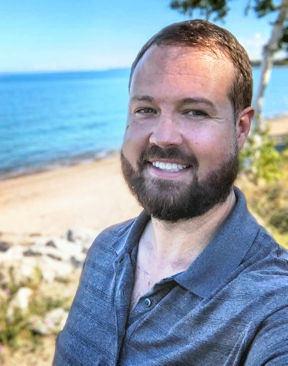 In 2018, Rory Cavanagh and his wife, Dr. Angela Cavanagh, chose Kincardine as the home for her family medical practice and for raising their two daughters. The municipality has been the centre of their family and professional life for the past nine years.
First elected as councillor-at-large in 2022, Cavanagh says this is an incredible community and serving on council for the past four years has only reinforced that.
"Stepping into the deputy mayor's role felt like the natural next step," he says. "I look at issues from the perspective of people with families who are going to be living here, working here, and seeing their children educated here for the next 40 years. I want to keep building on the positive work already under way and make sure the decisions we make now set Kincardine up well for the long haul."
Cavanagh brings a working knowledge of how the municipality actually runs, day-to-day and committee-to-committee.
"Over this term, I've served on the nuclear advisory committee, health care access committee, community grants committee, the Business Improvement Area (BIA) board, as vice-chairman of the South Bruce OPP police services board, and chaired the pier safety committee," he says. "That's given me a hand in everything from nuclear host community planning to health-care recruitment to supporting local businesses to community safety at our beaches and waterfront.
"Where I've gone further than most is on the professional development side. Alongside my council duties, I went back to school to complete a diploma in municipal administration through the Association of Municipal Managers, Clerks and Treasurers of Ontario (AMCTO) - covering municipal law, human resources, and land-use and planning. I wanted the specific formal education to match the hands-on experience, so that when I'm at the table on such issues as housing policy or governance, I'm bringing both types of expertise."
He says the top three issues facing the municipality right now, are:
The provincial tax assessment model for nuclear power generation - Most residents don't realize nuclear generating facilities aren't taxed like a typical property and Kincardine has experienced decades of shifting property tax burden (away from electricity industry properties and onto residents).
Housing and smart growth - "We need to keep pace with demand without losing what makes Kincardine work," he says. "That means supporting missing-middle housing options and walkable development, not sprawl."
Council efficiency and fiscal responsibility - "That starts with leading by example, which is why I've pushed to reduce council from nine members to seven," he says, "a leaner, more-focused council that still does right by every ward."
RUSS CROOK - WARD 1 COUNCILLOR
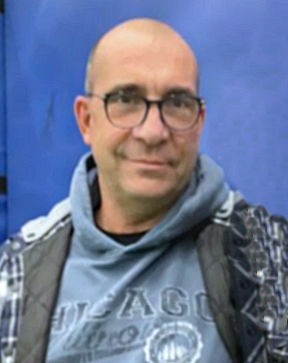 Russ Crook lives in the south end of Kincardine. He and his wife have lived here for around 17 years. They had a cottage for a few years until he retired and they moved here permanently.
"I was a career police officer in both Peel Region and Waterloo Region," he says. "Primarily, my work was in major investigations. Prior to policing, I was a paramedic in Waterloo Region, although in the 1980s, our paramedicine was not anywhere near advanced as the paramedics we rely on here in the municipality."
His wife, Teri, was a corporate executive in the packaging industry for 40 years. They started dating in high school in Waterloo, and they have one daughter, Sara, a police detective in Peel Region, and three grandsons.
"Teri and I spend the majority of our time volunteering at the Kincardine Legion," says Crook. "I serve on the executive as well as actively fund-raise in an effort to support our veterans, their families and the community where they live. Teri is Legion president."
New to politics, Crook says his interest in serving on council is nothing prophetic.
"I have kept abreast of local issues, followed Kincardine issues on social media and, of course, have discussed many of the topical points with Kincardine residents," he says. "I want to bring an 'everyday' person perspective to the grand table in the council room. I want to do my best to simplify decisions for the municipality. I want to bring to council the courage to state a position, back it up, and alter it if someone has a better idea. Although the issues may be complicated, I believe council members with strong ties in their community can make, and stand behind, their decisions without the need for expensive consultants. I want to be a member of that kind of council.
"I have never been a politician. I’ve never sought a position that required a vote. But I bring to council more than 35 years of public sector experience as well as exposure to the rules, bylaws and priorities of municipal council. As a police investigator responsible for mainly large scale investigations, there are a number of transferable skills I will bring to the table. The most prominent will be listening - listening to the everyday street talk.
"My experience allows me to quickly get to the issue, recognize bluster, and determine what needs attention. I have years of experience in strategic initiatives, objective management, personnel management, media relations, conflict resolution and problem-solving. These are everyday skills that will benefit municipality objectives. I don’t talk flowery."
Crook says the top three issues facing the municipality right now are:
Wastewater treatment - "Our current lagoon system is more than 60 years old," he says. "It’s designed to serve a rural population of 8,000-10,000 people. The municipality has had a population over 10,000 since the early 1990s. Add the influx of tourists in the summer, and we have far exceeded the capacity of our system.
"Efforts are being made to add aerators to the lagoon in hopes that pumping more oxygen into the system will help create more good bacteria to break down solids and treat the water. This has been tried and failed, but I understand the municipality is going to try harder. I feel you could pump me full of as much oxygen as you like, I’m not returning to my glory days of 60 years ago. We need a modern system like our neighbours."
Revenue stream from tourism - "We need to attract more tourists to boost our local economy and we need to develop a revenue stream from the influx of visitors to the beach and the community," says Crook. "Currently, thousands of people visit Kincardine beaches. Our municipal employees clean up their garbage, provide life-saving equipment, beautify the waterfront, manage and maintain the marina, etc.
"A tourist can visit the beach, have a family reunion, and leave three bags of garbage for the seagulls to spread … and I have yet to find a bag tag attached to a single one. Meanwhile, as a resident, I place my garbage at the curb for $3.50 a pop (that's a separate issue). Many beach towns generate revenue from the beach; we should too."
Timely development - "Affordability is an issue," he says. "Are we getting value from our tax dollars? Are the subdivisions we’re approving and installing services in, being developed at a pace we need? Can we force these developers to move on our timeline? Can we offer incentives, penalties, escape clauses? If a decision is made to develop land, why is it so complicated? I know full well the new high school is a school board issue but what have we done to express the urgency required to our community? How have we worked with the board, with developers, with businesses to ensure these strategies are being executed efficiently and in a timely fashion?
"I suspect I will have lots to learn regarding the road blocks to these three priorities, but those are the big auspicious goals. We’ll see how we all make out."
 JENNIFER PRENGER - WARD 1 COUNCILLOR
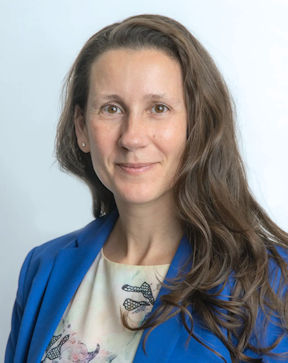
Jennifer Prenger of Kincardine has served on council for the past four years as councillor-at-large. She is new to the position of Ward 1 councillor.
When she ran for council in 2022, her motivation was to bring changes to both the priorities of the municipality and how council operates.
She has an Honours undergraduate degree in Political Science and a Master's degree in International Public Policy with experience in research and developing policy. She works in the regulatory affairs department for Bruce Power.
AMANDA STEINHOFF GRAY - WARD 3 COUNCILLOR
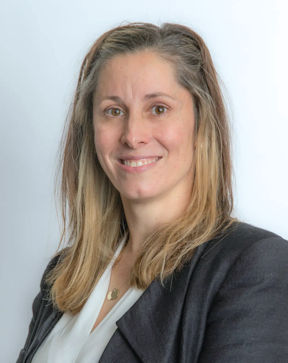 Amanda Steinhoff Gray grew up in the Village of Tiverton and has been lucky enough to return home to the village to raise her family.
"As a direct descendant of Paddy Walker, I have been fortunate to have a large extended family in the area and have enjoyed sometimes performing and other times listening to the family as they play at different events," she says.
"I have a Bachelor of Arts and a Masters degree with a focus on Policy and Legislation from Wilfrid Laurier University and a Bachelor of Education from D’Youville College. I currently work at Bruce Power as a Senior Strategist - Business Strategy."
She ran for re-election (and was successful) because she wants to represent her community and help shape good decisions to set up the municipality for success in the long-term.
"Having finished my first term, I want to apply everything I’ve learned to the role," she says. "It goes without saying that (former Ward 3 councillor) Randy Roppel left some big shoes to fill. He has given me a lot of mentorship over the previous term and I strive to meet the high standards he set for the role."
Analytical by nature, Steinhoff Gray spends a significant amount of time reviewing materials and researching various issues. "I’m not afraid to admit I’m wrong, and I place a lot of value in the voice of the community."
As for the top issues facing the municipality, she says that Bruce "C" readiness is going to be a huge topic that needs to be addressed.
Plus, it goes without saying that the primary accountability as a municipality is asset management.
"We have a lot of assets that do not get a lot of attention until we have tough decisions about whether or not we can afford to replace or repair them," she says.
"I think the other conversations have to be about all the areas that municipalities have needed to become involved in that are, technically, provincial responsibilities, such as health care and affordable housing. How we can better leverage grants and lobby for support from our counterparts in federal and municipal government, will need to be an important aspect of the term."
Written ByLiz Dadson is the founder and editor of the Kincardine Record and has been in the news business since 1986.
Related Stories
No related stories.