




 March 1, 2016
1583
March 1, 2016
1583
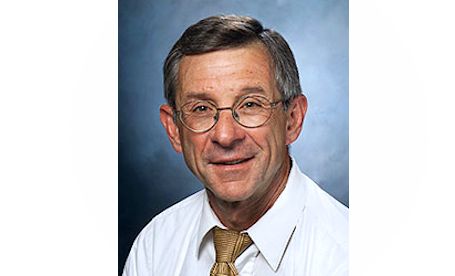
Lead advisor to United States president Barrack Obama's Blue Ribbon Commission on America's Nuclear Future, Isaacs was in Kincardine Tuesday, at the invitation of the Nuclear Waste Management Organization (NWMO), to speak at community liaison committee meetings in the Municipalities of Huron-Kinloss and South Bruce. These two municipalities continue to learn more about Canada’s Plan for the long-term management of used nuclear fuel.
Unfortunately, due to inclement weather Tuesday night, Isaacs was unable to speak in Ripley, but is slated to speak Thursday, March 3, at 7 p.m. at the Mildmay Carrick Recreation Complex, 24 Vincent Street, Mildmay. The meeting is open to the public.
In a telephone interview, Tuesday afternoon, Isaacs said what he brings to the committee meetings is a long set of experiences with how these facilities run in other countries. Besides the U.S., he has worked extensively in countries in Europe and Asia, and with the NWMO.
“There are two major challenges,” he said. “The scientific and technical one; and the societal and political one.”
On the scientific side, safety is the most important thing of all, he said. “But is is a political problem as you determine a place to isolate this waste, and then assure yourself and the world that it's safe.”
On the societal side, it's important to engage the communities and give people an integral role in the process, he said.
“If the project is in the best interest of the community, it is a wonderful opportunity,” said Isaacs. “For example, the leading countries for permanent disposal sites are Sweden and Finland. The host communities there are wildly happy to have these facilities there.”
Sweden and Finland have gone through the licensing phase and the facilities should be built and operating within a decade, he said. France is also in the process, as is Canada, but the U.S. is still struggling.
During his career, Isaacs has focused on issues of nuclear power, national security, non-proliferation, waste management, facility siting, and public trust. He is a member of the National Academy of Sciences' Nuclear and Radiation Studies Board and serves as an advisor and consultant to foreign nuclear programs, including Canada’s long-term nuclear waste management program.
He said any municipality wanting to host a permanent disposal site must make a firm commitment to public engagement. “You need to work in partnership with the people. If the community is interested, then you have to work through the process together.”
And when dealing with the public, Isaacs' advice is not to refer to the site as a Deep Geologic Repository (DGR) or long-term storage of used fuel, but rather permanent disposal of used fuel.
As for anti-nuclear groups, he said the nuclear industry is controversial no matter where you go. The important thing to remember is the high-level waste has to be dealt with, and ultimately a decision made.
Written ByLiz Dadson is the founder and editor of the Kincardine Record and has been in the news business since 1986.
Related Stories
No related stories.