



 March 3, 2016
2522
March 3, 2016
2522
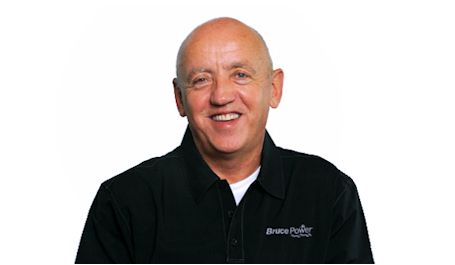
As of March 1, chief financial officer Kevin Kelly became acting president until a new CEO has been hired, but Hawthorne said he will continue with the company until the end of April. Beyond that, he will act in an advisory capacity for a few years, assisting with the transition.
“My next step is returning to the U.K., and playing a role in the new nuclear build that's going on there,” said Hawthorne, in a conference call, Tuesday.
He has been asked to be chairman of the board of Horizon Nuclear which plans to build six advanced boiling water reactors in the U.K. However, he said it was important to stabilize Bruce Power first, which was achieved Dec. 3, 2015, with the announcement that the company's future was secured for decades to come.
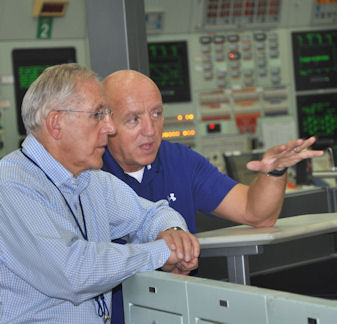 “Leading this company has been the highlight of my career,” said Hawthorne. “And, although I have enjoyed every minute, it is helpful for me to explain that during my tenure as CEO, I have weathered five corporate restructurings, multiple changes to the electricity market in Ontario, four prime ministers, four premiers, and 10 energy ministers, not to mention the 2003 blackout and the 2011 Fukushima event and its implications for the global nuclear industry.”
So, what has been his greatest achievement at Bruce Power?
“I'm an operator at heart,” said Hawthorne. “So, from an operational point of view, maximizing the output at the site, with all eight reactors working at full power, that was a wonderful sight to see.”
Hawthorne left the U.K. in 1997 when it was obvious the government of the day was not going to move forward and build new reactors.
“At that time, the thought was that I would come to North America for a couple of years, three at the most, and try to create a business here,” he said. “In the end that ‘detour’ brought us to Kincardine, where Lesley and I made our home, got married, became Canadians and helped create the Bruce Power you see today.”
Hawthorne said when he arrived at the Bruce Nuclear site 15 years ago, it was obvious the community and the workforce had been severely impacted by the closure of the Bruce A units in the mid-1990s and it was important to conduct an assessment of the condition of these assets to see if there was any potential for return-to-service.
“Our assessment told us Units 3 and 4 could be restarted without major component replacement and in a reasonable timescale,” he said. “We then embarked on this work program more or less from the day Bruce Power was formed. This decision had a massive impact on the staff and the community because it signalled a resurrection of this site and sent a strong message that the ‘new guys’ were in for the long-term. The decision to work on the Bruce A units also allowed us to retain all staff and actually start hiring new employees and quickly reverse our aging demographic.”
From there, Bruce Power went on to make history by restarting mothballed Units 1 and 2 at Bruce A, something no other company had ever done in the nuclear industry.
“In October, 2005, we entered into a long-term agreement that would allow us to make this large investment,” said Hawthorne. “The rebuild and return-to-service of these units would require us to do things thought impossible with the CANDU nuclear reactor design. People in the industry had told us that for several years and we had always proven them wrong.
“The return-to-service program took longer and cost more than any of us would have liked, and it was a stressful time for me and for everyone working on the project, but we stuck to the task and returned Units 1 and 2 to service. In so doing, we created the world’s largest operating nuclear facility and proved a lot of naysayers wrong.”
As he and his wife, Lesley, prepare to leave their home here, Hawthorne admitted it's going to be tough.
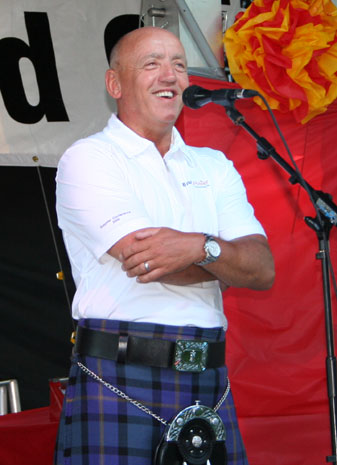 “I'm not one for long goodbyes,” he said. “We have strong, emotional ties to this community and the employees at Bruce Power. Since announcing my retirement, Lesley and I have been overwhelmed by E-mails and messages of encouragement from Bruce Power employees and members of our community.
“It's tough to go, but it's the right thing to do. The company has to plan for the next step in refurbishment of this site. A new leader should be involved in that planning, so it's only logical that a new CEO takes responsibility for that next phase.”
The timing is good for him to return to the U.K. and address his “unfinished business” in the nuclear industry there, said Hawthorne. It's also an opportunity to continue his career and be closer to his family.
“When I left the U.K., my daughter was 17 and at university,” he said. “Now, she's 34 and has two children. I've missed a lot of that, especially time with my grandchildren.
“We will take with us the great memories of our time here. My wife and I were married at the Harbour Street Brasserie in Kincardine. We have done a lot through Bruce Power and personally to support the community and its great causes. We've loved our time here. It's a special place and a special community.
“We built our home here and we're not planning to sell our house; we're going to be here through the summer. But we've purchased a house in the U.K. which softens the blow of leaving here.”
The 60-year-old Hawthorne has always been a strong advocate for nuclear and an affable and engaging spokesman for the industry.
“I am acutely aware that if the industry is to meet the global need for a clean, affordable and reliable source of power, then we have to be able to build new plants successfully in a commercial environment,” he said. “My hope is that I can play some small role in making this happen in the U.K., but my heart will always be with Bruce Power, and our connection with this community will be a lifetime thing.”
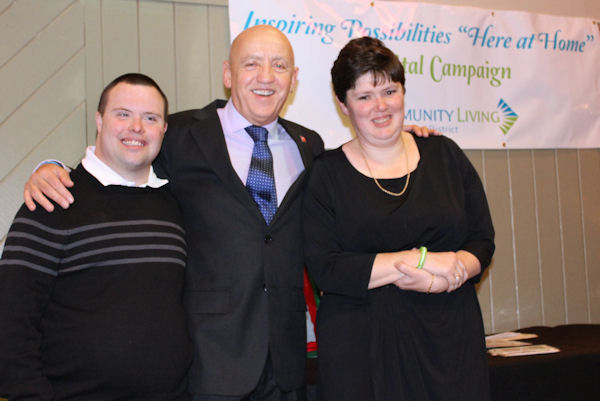
A tribute to Hawthorne will be held at the Ripley-Huron Community Centre, Wednesday, April 20, in support of the Women’s House Serving Bruce Grey and the Liv-A-Little Foundation. Those interested can find additional details at: www.brucepower.com/duncantribute.
To read Hawthorne's letter to the community regarding his retirement, click here.
Written ByLiz Dadson is the founder and editor of the Kincardine Record and has been in the news business since 1986.
Related Stories
No related stories.