




 April 12, 2016
2067
April 12, 2016
2067
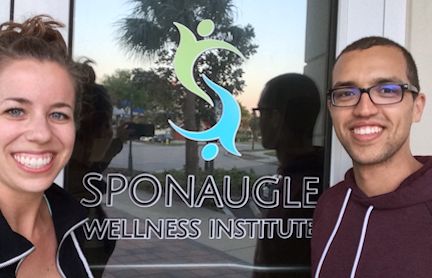
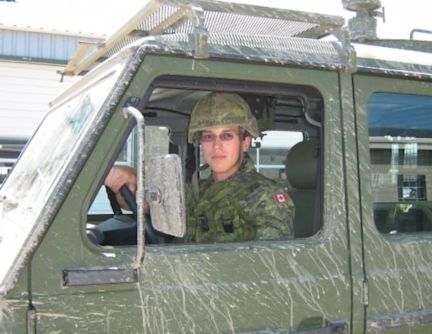 After finding an insect imbedded in the back of his head while serving in the military, Dave (R) began experiencing a myriad of strange symptoms. He would have panic attacks for “no reason.” He began suffering neurological symptoms and headaches quite often, followed by a difficulty in walking – needing to consciously think about how to walk instead of it being the subconscious function it always was.
Pain spread all over his body in his muscles and joints. His knees would burn and his body hurt as if he had just taken a heavy impact. He began sleeping a lot to try to regain his fleeting energy, but no matter how much he slept, he never felt rested. He was exhausted. His symptoms, exhaustion, memory problems and everything else were piling up to the point of negatively impacting his work, forcing him to resign from his position with the Bank of Nova Scotia in May of 2014.
This added a huge challenge, financially, especially because he was engaged to be married to Katie in September that year.
 "This turned out to be a blessing, though," says Katie, "because it wasn’t long until Dave wasn’t able to care for himself and, being now married, we could live together and I could help him with everyday tasks and meals."
More neurological symptoms continued to develop, including changes to tastes and smells. He knew what his daily coffee was supposed to taste like but it no longer tasted that way at all, it tasted like something completely different and completely unknown to him.
He began to lose fine motor skill precision. His memory was fleeting at an alarming rate. He forgot vocabulary that he would use everyday; he forgot names of people he knew and forgot fond and recent memories that he had. He forgot the meaning of simple words that no one forgets. He found it difficult to read because it seemed in the time between reading one word and then the next, he had forgotten the word he read milliseconds before.
He became sloppy, clumsy, and his depth perception was out of whack. The headaches worsened into persistent, recurring migraines that, for some time, resembled stroke-like symptoms, causing disorientation, confusion, slurred speech and an appearance of inebriation. These were triggered by new food sensitivities, light sensitivity and sound sensitivity.
Not knowing what was happening, Dave became quite anxious. He felt himself declining fast and no one knew why. His ability to read situations around him and keep calm decreased, and when his symptoms flared up, he felt as though he was using every ounce of strength to simply endure and be still. He knew something was very wrong.
Doctors did tests, but still nothing conclusive came back as to what the cause could be. Because of the wide array of symptoms and lack of tests coming back with anything, doctors began telling Dave that maybe he was just ‘stressed’ or maybe it was ‘all in his head,’ none of which are uncommon at all for Lyme sufferers today to hear from their doctor.
"This was devastating to us both and quite discouraging," says Katie, "until one day a gastroenterologist ran a test that Dave hadn’t had yet, the Lyme 2-tier test. This was by no means conclusive (there isn’t a conclusive test that exists yet), but it did show a positive result for the first tier. This made us very hopeful that we were on to something.
"We began asking questions about Lyme and researching it further. As Dave read about it, he immediately knew that this was what was happening to him. It explained everything from his nervous system symptoms, to the brain-related symptoms, to the widespread pain, and everything else. We were ecstatic to at least have a lead."
After seeing more doctors and learning that Canada doesn’t have the research yet to treat chronic Lyme disease, the couple was advised to seek treatment in the United States from a doctor who specializes in Lyme and the Lyme co-infections.
"I was so disappointed and couldn't believe what I was hearing," says Katie. "I always thought Canada was cutting edge, and that health care was just covered by the province. I never thought I would have to go outside of my country to seek medical treatment. In talking with others going through the same struggle, we have since learned that this is a common reaction for many with Lyme, but it has really served to show us how truly blessed we are as Canadians to have so much covered for us."
Finally, in May, 2015, a New York doctor diagnosed Dave with Chronic Lyme Disease. He began a treatment protocol to reduce the symptoms, but even that was very expensive. They began raising funds to travel to see Dr. Sponaugle in Florida who uses fewer antibiotics and more natural/herbal treatments wherever possible to reduce the harmful and often permanent side effects of long-term daily antibiotics.
His clinic seemed to have the highest success rate and his patients are up and running again in a matter of five to eight months, on average, depending on how they respond and how deeply entrenched the infection is. The cost of the treatment is about $80,000 (U.S.).
By now, Dave and Katie had cashed in the last of their savings and were surviving on her supply teaching wage. However, their expenses had increased due to Dave’s supplements, medication and special diet.
"In spite of living as frugally as possible, and my taking as many supply calls as I could, we struggled to afford day-to-day bills, much less pay for the prescribed treatments to help Dave's symptoms," says Katie. "We were going to the closest Lyme clinic to our home, which was in New York state, where most everyone with Chronic Lyme Disease from Ontario goes.
"While we felt the urgent need to get Dave some care and were thankful to be seeing this doctor in New York and having Dave in treatment, we were wary of the permanent effects of long-term antibiotics and other medications that are extremely harsh on his already-weak immune system. Needless to say, we were not totally comfortable with the idea of going there long-term."
Determined to find the money to get Dave to the Sponaugle Wellness Institute, Katie and Dave turned to their church, the Kincardine Lighthouse Fellowship Baptist Church, and the Kincardine community for help. Thanks to several fund-raisers and donations, the funds materialized and the couple was on the way to the treatment centre in Florida.

"Dave has just finished his third week of treatment, which has so far focused mostly on detoxifying his body through IV infusions to allow his overburdened immune system to kick-start and begin killing the Lyme bacteria," says Katie. "In the past few days, his symptoms have increased, which indicates that he has gone into a 'kill," meaning his immune system is beginning to do its job. So, it's a good thing, even though it doesn't feel so good!
"We had another meeting with Dr. Sponaugle this week. He reviewed Dave's most recent tests and compared them to the results of his first round of tests upon his intake here. The late stage of Lyme that Dave has, affects every body system, so the first tests revealed that a lot was going wrong with his hormones, brain chemistry, gut flora, and more. We were happy to see in these most recent tests that Dave's brain chemistry is beginning to level out; it's just one piece of the overall puzzle, but it's great to see progress. Other tests revealed a moderate level of infection in Dave's brain, which has prompted Dr. Sponaugle to accelerate the treatment with the early addition of IV antibiotics starting on Monday.
"While we're still unsure exactly how long Dave's treatment will be, the average Lyme patient here requires 12-16 weeks to clear the infection. Though Dave's body now has a lot of other issues going on as a result of the Lyme, including mold toxicity and gut dysbiosis, Dr. Sponaugle has said that Dave's case appears to be a pretty straightforward one, and that some of Dave's test results look better than many of the patients he sees at his clinic. We're hopeful that this means Dave will be able to complete his treatment here quickly."
The church and community continue to fund-raise in support of Dave and Katie. A "Lyme Aid" thrifting fund-raiser is scheduled for Saturday, April 23, from 10 a.m. to 3 p.m., at the Lighthouse Baptist Church,
In addition, there is a CIBC account set up, if people would like to donate directly into the account for “Richard Luymes in Trust for David Underwood” – the transit No. is 05252 and the account No. is 7471238.
For more information about Dave's illness and the fund-raising efforts to assist him and Katie, check the Facebook at: https://www.youcaring.com/dave-underwood-368979/update/418186#.VpUuCNRPBW0.facebook
Dave's story on video
Dave's brother, who served in the military alongside him, has also been diagnosed with Lyme. You can read his story here: http://www.youcaring.com/richard-underwood-418190. You can also watch a news story that CTV Winnipeg did on him here: http://winnipeg.ctvnews.ca/video?playlistId=1.2530797.
Written ByLiz Dadson is the founder and editor of the Kincardine Record and has been in the news business since 1986.
Related Stories
No related stories.