


 May 18, 2016
1509
May 18, 2016
1509

(SOUTHERN BRUCE COUNTY, ON) – The South Bruce OPP is reminding residents and tourists that being well-informed about provincial safe boating practices and laws can go a long way to ensure an enjoyable and tragedy-free boating season.
The majority of victims who die in fatal boating incidents are not wearing a personal flotation device (PFD) or lifejacket.
Drinking and boating is just as dangerous as drinking and driving, and the very same laws in place for impaired driving also apply to impaired boating.
If you suspect that someone is operating a boat while impaired, call 9-1-1. In doing so, you could be saving lives.
Always do a thorough check of your boat and safety equipment before heading out on the water as mechanical breakdowns account for a significant number of calls for assistance by the OPP.
Fact:
The Canadian Red Cross and Transport Canada have excellent information about PFDs and lifejackets on their websites. Here are some helpful links: www.tc.gc.ca/eng/marinesafety/debs-obs-equipment-lifejackets-information-1324.htm
Boaters caught drinking and boating in Ontario face similar consequences to those caught drinking and driving. This includes:
Losing your licence for a year if convicted under the Criminal Code for having a Blood Alcohol Concentration (BAC) that exceeds 0.08
Mandatory alcohol assessment, education or treatment and follow-up
Ignition interlock condition to their driver’s licence
Vehicle impoundment if caught driving a motor vehicle while under suspension
Boaters also face an immediate licence suspension for having a BAC in the Warn Range of 0.05 to 0.08.
These laws apply to anyone who is caught drinking and operating motorized and non-motorized vessels, including power boats, canoes, kayaks, personal watercraft, sailboats, dinghies and other inflatable boats and rafts.
The provincial laws regarding alcohol on boats do not permit any open alcohol to be available or consumed by anyone onboard the boat while it is under way. Only boats which have sleeping, washroom and cooking facilities integrated into their design may legally have open alcohol onboard but only when the boat is being used as a residence (at, anchored or tied to a dock).
Being well-prepared is the key to safe and enjoyable boating.
Check your Boat. Familiarize yourself with the boat you are operating. Check the condition of your vessel and ensure it is properly prepared for the boating season.
Be Prepared. Mechanical breakdowns account for a significant number of calls for assistance to the OPP. Most of these embarrassing incidents are preventable by ensuring your vessel is serviceable, you have sufficient gas. Part of being prepared is also making sure that the weather and water conditions are suitable for your day out on the water.
Plan ahead. Remember when things go wrong on the water, it happens very quickly and you don’t always have time to react. A prudent skipper always discusses his or her plans with a family member before setting out.
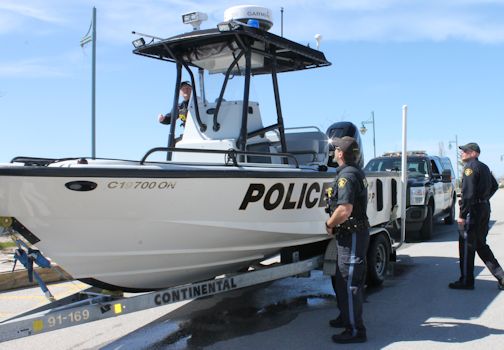
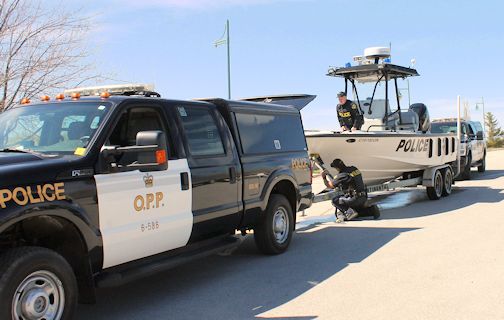
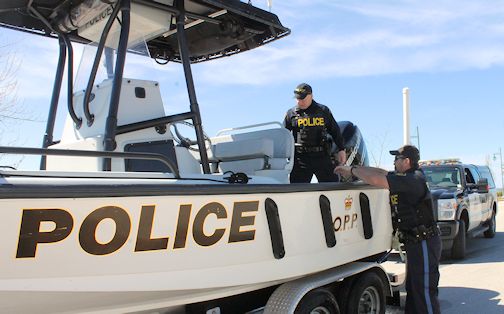
Following a Marine Unit training session with the South Bruce OPP Wednesday at Kincardine Harbour, Grey OPP constables Dale Becler (in behind) and Drew Wilder (R), along with Bruce Peninsula OPP constable Terry King, pack up this 21-foot patrol boat, for the trip home; photos by Liz Dadson
Related Stories
No related stories.