Local veterinarians recognized for Lyme disease tick surveillance
The Grey Bruce Health Unit is acknowledging, with thanks, the help from local veterinary clinics to support increased tick surveillance related to Lyme disease.
In the past, knowledge of the local tick population came as a result of ticks removed exclusively from humans. This year, working with Grey Bruce One Health, ticks taken from the animal patients at six local veterinary clinics were also submitted to the health unit for identification.
This more than doubled the number of ticks normally received, allowing the health unit to do a better job of identifying local concentrations of black-legged ticks and, in turn, guides plans for increased surveillance.
The six clinics involved in the program, are:
- Kincardine Veterinary Services
- Hanover Veterinary Hospital
- Markdale Veterinary Clinic
- Melanie Grein, DVM, Durham
- Sunset Strip Veterinary Clinic, Owen Sound
- Wiarton Animal Hospital
In order to increase the geographic range of surveillance, the health unit is looking to enroll additional veterinary clinics into this program.
In Ontario, Lyme disease is only transmitted through the bite of a blacklegged tick. The majority of human cases occur as a result of exposure in areas known to harbour infected ticks. Knowing the local population of blacklegged ticks is important to assess the local risk of exposure.
For more information about Lyme disease visit
Public Health Ontario.
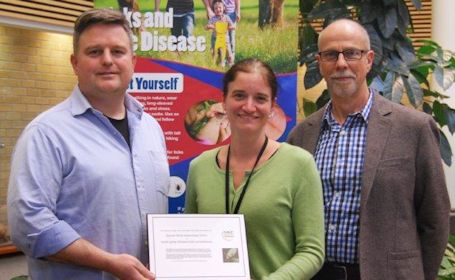
 Veterinarian Dr. Michael Sloss (left) of the Sunset Strip Veterinary Clinic in Owen Sound, receives a plaque from the Grey-Bruce Medical Officer of Health, Dr. Christine Kennedy, and Bob Hart, public health manager with the Grey Bruce Health Unit, in recognition of vet clinics across Grey-Bruce participating in an enhanced tick surveillance program; photo courtesy of the Grey Bruce Health Unit
 Written By
No bio for this author.





Related Stories
No related stories.