Ontario cattle producers stop at Eby farm in Kincardine during feedlot bus tour
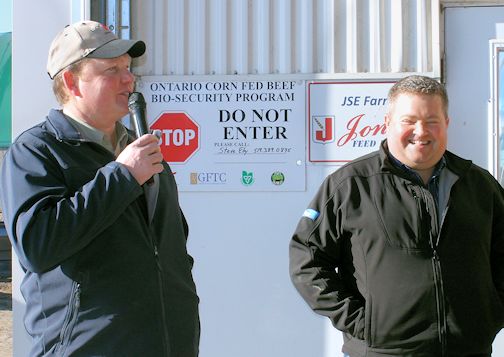
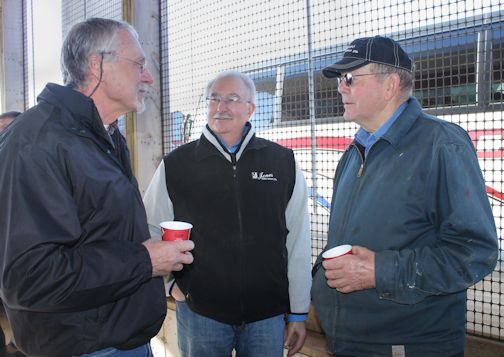
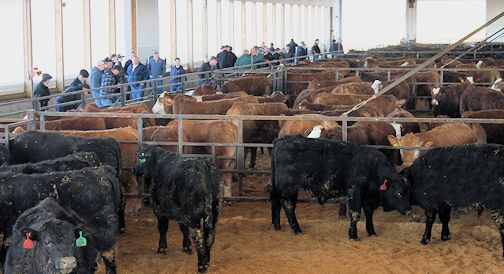
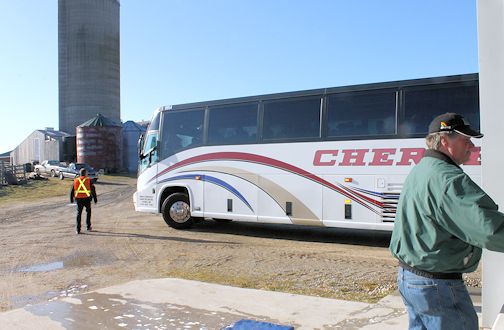
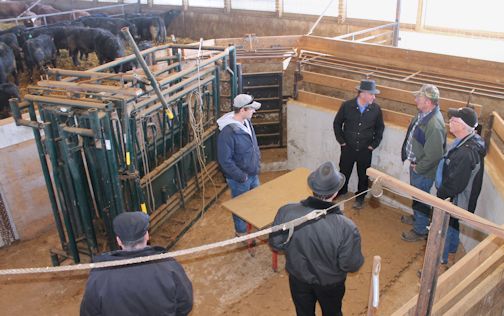
More than 100 cattle producers from across Ontario converged on JSE Farms, owned and operated by Steve Eby, on the 9th Concession in the Municipality of Kincardine, northeast of Armow, Wednesday morning.
The annual Joint Industry Beef Producer Meeting and Feedlot Bus Tour was hosted by Metzger Vet of Chesley, Elanco Canada Ltd. of Guelph, and Jones Feed Mills of Linwood. Besides the visit to the Eby farm, the tour included stops at Chimed Farms, owned and operated by Chris and Sandra Freiburger of Walkerton; Carl Frook's farm at Elmwood; and a hot beef lunch at the Elmwood Community Centre, followed by a producer discussion.
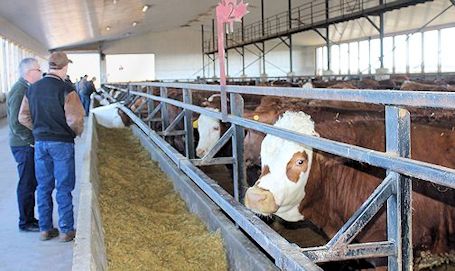
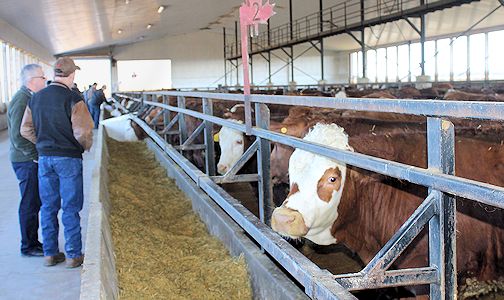
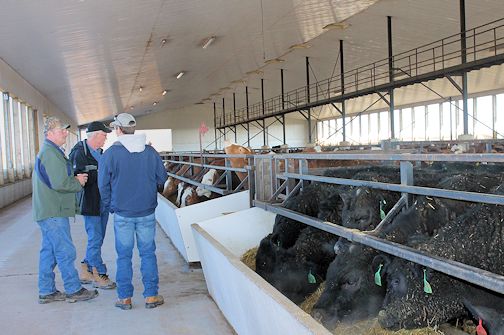
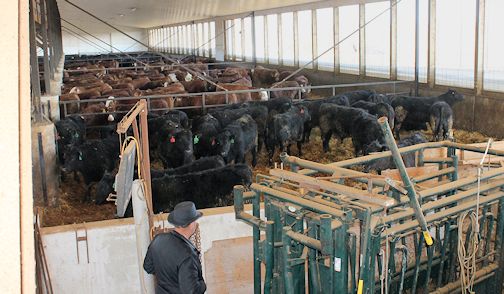
The tour at the Eby farm focused on the relatively-new feedlot barn. Built in 2013, it features a cathedral ceiling that creates excellent air flow to the 15 chimneys in the roof.
Eby told the crowd that the barn holds up to 475 head of cattle, but currently has 440 cattle in four pens, allowing for about 40 square feet per head. He said the facility is more efficient as he spends the same amount of time caring for 450-500 cattle, as he did with 250 cattle in the old barn.
He said the black cattle come into the finishing pens at about 770 pounds and the goal is a weight gain of four pounds per day, over 130 days, before they are shipped out at about 1,300 pounds. The numbers are different for the other breeds of cattle, and vary depending on the length of stay, with a feed conversion of 6:1.
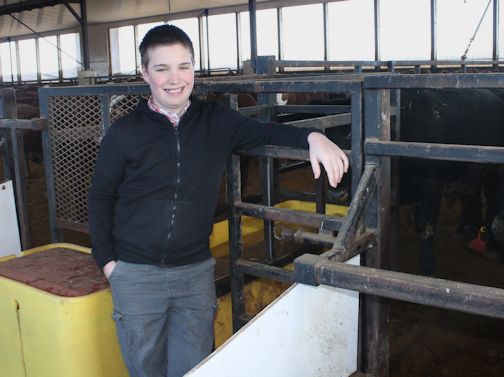
Working with Eby, are his father, Stan, and a neighbour's son, Mark Weber, 12, who helps clean out the cattle, process them for shipping, and cleans around the water bowls.
Eby said each water bowl has its own individual water line, but nothing is buried in the ground so the lines don't freeze. He has a water meter that monitors the usage which is checked by Verified Beef Production Plus, a Canadian beef cattle industry-led program able to provide verification of all aspects of sustainable beef production. On average, the water consumption is 6.7 gallons per head per day.
As for nutrient management, the feedlot uses a fair amount of straw, said Eby, about four pounds per head per day. The south side is scraped every five days, and the north side every few weeks. The 300-foot barn generates about 10 tons of manure per day, and slopes about 30 inches to the west to promote rainwater run-off.
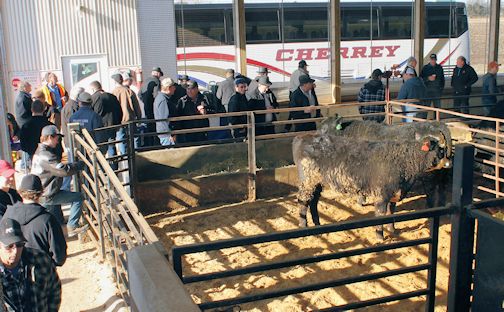
Eby had three steers in a pen: a red one, black one, and white-faced one, and he encouraged the producers to guess the weight of the cattle and submit their answers for a draw.
He also welcomed questions from the crowd before the tour moved on to its next stop.
 Written By
Liz Dadson is the founder and editor of the Kincardine Record and has been in the news business since 1986.




Related Stories
No related stories.